March 4, 2026 · Natalia Mejia — Paramedical Tattoo & Scar Specialist in NYC
How Long Does Scar Treatment Take? The Truth About Real Results
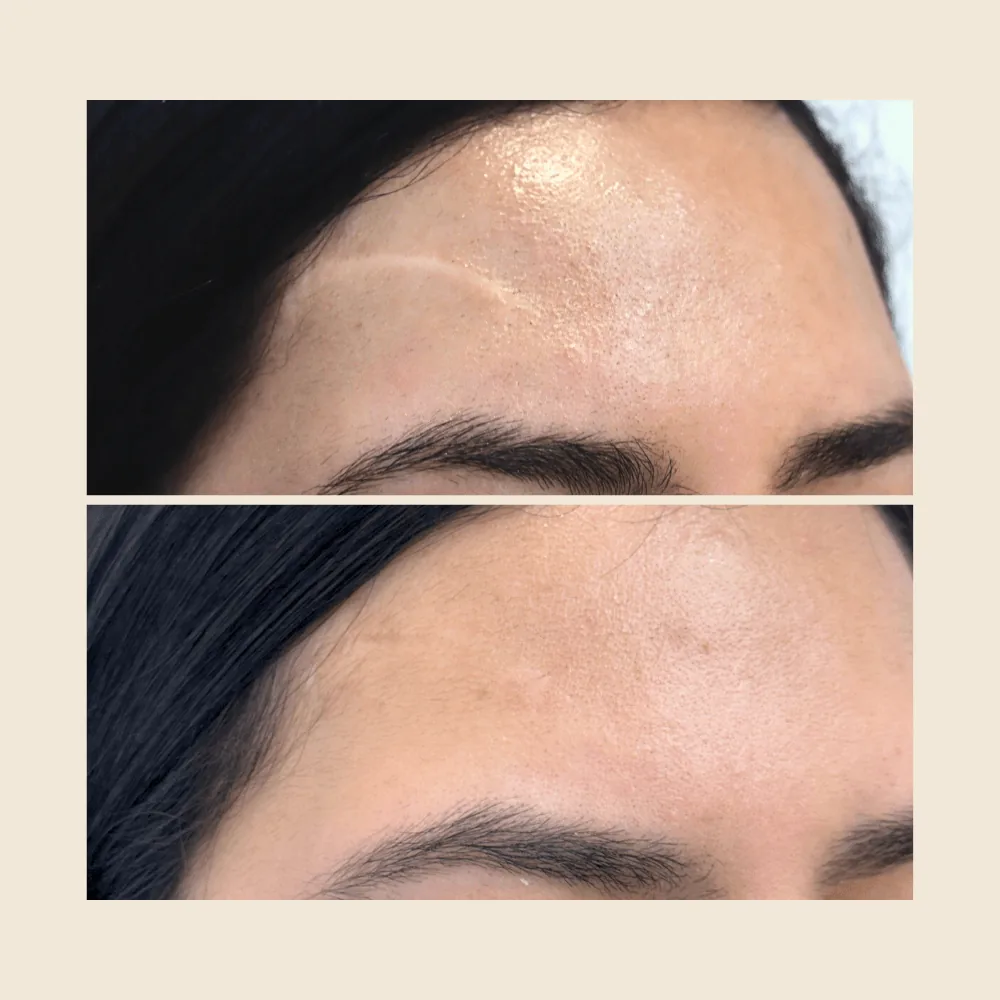
Scar treatment takes months, not a single session: I usually space treatments every 60 to 90 days, sometimes longer, because the real change happens between sessions, as the skin produces and reorganizes collagen. Regeneration comes first to improve the tissue, and camouflage, if needed, is built in layers once the skin is stable. How long it takes depends on your skin type, the type of scar, its depth and location, and your aftercare.
If you’re expecting your scar to dramatically improve after one treatment session, I need to be honest with you — that’s not how skin works.
Not because your scar can’t improve.
But because real transformation follows biology, not shortcuts.
In my practice in Manhattan, I don’t approach scars as something to fix instantly. I treat them as living tissue — something that continues to evolve, respond, and regenerate over time. My role is not to rush that process, but to guide it in the right direction.
Scar improvement is not a moment.
It is a progression.
Why Does Scar Improvement Take Time?
When I treat a scar, I am not simply working on the surface. I am activating a series of biological responses within your skin.
These include collagen production, collagen remodeling, cellular turnover, changes in circulation, and gradual pigment regulation. Each of these processes happens in stages, and each stage requires time.
Your body does not rebuild tissue in a day.
It rebuilds it in cycles.
A scar itself took time to form. After an injury or surgery, your skin went through inflammation, repair, and remodeling. That entire process can last months — sometimes longer.
Improving that structure requires respecting the same biology.
When people try to rush results, the skin often reacts with more inflammation. And inflammation is one of the main reasons scars become darker, thicker, or more irregular — especially in medium to darker skin tones.
This is why I focus on controlled, progressive improvement instead of aggressive, short-term changes.
What Happens Between Sessions?
One of the biggest misconceptions about scar treatment is that results come from the session itself.
They don’t.
The session initiates change, but the real transformation happens in the weeks that follow.
After treatment, your skin begins to respond. It starts breaking down disorganized scar tissue while producing new collagen. The structure slowly reorganizes, and over time, the tissue becomes more balanced.
This process cannot be rushed.
Because of this, I space treatments carefully — typically every 60 to 90 days, and sometimes longer depending on how your skin responds.
This timing allows your skin to complete a full cycle of healing before we stimulate it again.
If treatments are done too close together, we interrupt the process instead of supporting it. And when that happens, results become less predictable.
Why Does Regeneration Come First?
When working with scars, especially more complex ones, I always begin with regeneration.
Scar tissue is not the same as normal skin. It often has irregular texture, reduced elasticity, altered circulation, and an uneven response to pigmentation.
Before we think about color, we need to improve the quality of the tissue itself.
During this phase, I focus on:
- Improving texture
- Increasing flexibility
- Supporting collagen remodeling
- Strengthening the skin
- Reducing underlying inflammation
This creates a more stable foundation.
Without this step, any attempt to correct color — especially with camouflage — can lead to inconsistent or unnatural results.
When Does Camouflage Come In?
Once the tissue has improved and stabilized, we can move into refinement.
This is where camouflage or neutralization may come in, particularly for scars that appear darker than the surrounding skin.
But this step requires precision.
Scar tissue does not hold pigment the same way healthy skin does. It can absorb color unevenly, shift over time, or respond differently depending on how stable the tissue is.
That is why I approach camouflage in layers.
Instead of trying to achieve a final result in one session, I gradually build color, allowing the skin to heal and settle between each step. This creates a more natural, long-term outcome.
Camouflage is not about covering the scar.
It is about integrating it.
| Phase | Timing |
|---|---|
| Regeneration | Starts with the 90-Day Scar Concierge program around your surgery, or at around 6 months; sessions every 60 to 90 days |
| Camouflage, if needed | Starts at least 6 months to a year after surgery; white scars every 2 months, dark scars every 3 months (sometimes 4) |
| Visible results | Usually between the second and fourth sessions |
What Affects How Long Your Treatment Takes?
Every scar has its own behavior.
Your skin type plays a significant role in how your scar responds. Medium to darker skin tones, for example, are more reactive to inflammation and more prone to hyperpigmentation. This requires a more controlled and careful approach.
The type of scar also matters. A sunken scar does not respond the same way as a raised scar. Surgical scars behave differently from acne scars or stretch marks. The depth of the scar, its location, and how it healed all influence the treatment strategy.
Even genetics play a role. Some people are more prone to thicker scars or pigmentation changes, while others heal more evenly.
Because of this, there is no universal protocol.
Every treatment plan I design is personalized. It is based on how your skin behaves, not on a fixed formula.
What Can You Do to Support Your Results?
Scar treatment is not something that happens only during your appointments. It is a collaboration.
I provide the technique, the structure, and the clinical direction. But your results also depend on how you care for your skin between sessions.
Protecting your skin from sun exposure is essential, especially during healing. Avoiding unnecessary irritation, following aftercare instructions, and allowing your skin the time it needs to recover all play a role in the final outcome.
Consistency is what allows progress to build.
When the treatment and the aftercare align, the results become more stable and more predictable.
What Do Real Results Look Like?
Real results are not immediate, and they are not about perfection.
They are about progression.
Over time, you may begin to notice that the texture becomes smoother, the tissue feels softer, and the color becomes more balanced. The scar does not disappear, but it becomes less noticeable.
It no longer draws the same attention.
And most importantly, it no longer feels like something you need to hide.
Healing Is Not Always Linear
Another important thing to understand is that healing is not always a straight line.
Some weeks you may notice more visible changes. Other times, it may feel like nothing is happening.
In some cases, the skin may even look slightly more reactive before it improves. This can be part of the regeneration process.
This is normal.
Progress happens over time, and consistency is what allows those changes to accumulate.
Why Don’t I Rush Scar Treatment?
I do not rush the skin.
I guide it.
Because when we respect the biology of healing, results become more natural, more stable, and longer lasting.
Quick results are often temporary.
Intentional results are sustainable.
If You’re Ready to Do This the Right Way
If you are looking for a quick fix, I may not be the right fit for you.
But if you are ready to approach your skin with patience, structure, and a long-term vision, I can guide you through that process.
Because your scar does not need to be rushed.
It needs to be treated correctly.
Frequently Asked Questions
How long does scar treatment take?
It is a progression over several months. Treatments are usually spaced every 60 to 90 days, sometimes longer, so the skin can complete a full healing cycle between sessions.
Why can’t scar treatments be done closer together?
Because the transformation happens in the weeks after each session. Treating too soon interrupts the process and makes the results less predictable.
Why does my scar look more reactive after treatment?
Healing is not always linear. In some cases, the skin looks slightly more reactive before it improves, and this can be part of the regeneration process.
What can I do to speed up my results?
Protect the scar from the sun, avoid unnecessary irritation, and follow your aftercare instructions. Consistency is what allows progress to build.
You can also read when to start scar treatment. If you are ready to approach your scar with patience and structure, book a consultation.
—
Natalia Mejía
Scar Specialist | Manhattan