April 8, 2026 · Natalia Mejia — Paramedical Tattoo & Scar Specialist in NYC
Is It Safe to Tattoo the Areola? What to Know Before You Start
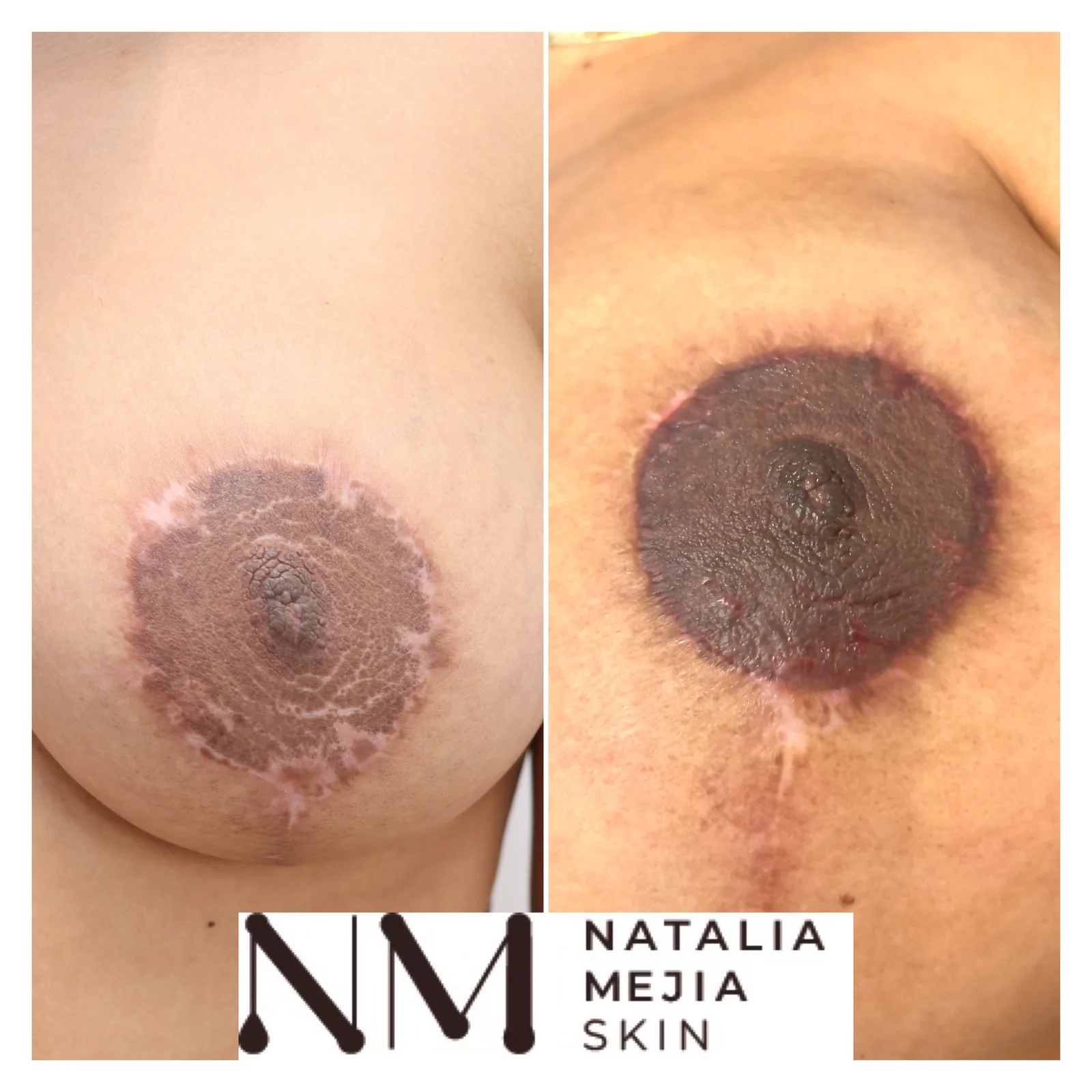
Yes, it is safe to tattoo the areola when it is done by a trained paramedical tattoo artist, with sterile technique, on skin that has fully healed. I wait 12 months after surgery before starting, so the scar can mature completely; this is especially important after grafts, radiation, or necrosis. Fragile or scarred tissue may need regenerative treatment first, and the procedure is delayed if the skin is still inflamed, infected, or not cleared by your doctor after radiation or chemotherapy.
If you have recently had a mastectomy, breast reconstruction, or cosmetic breast surgery, you may be considering areola tattooing as the final step in your healing journey. It is completely normal to feel nervous, especially about safety, and it is one of the questions I hear most often. This is what makes it safe, what to expect, and how to decide what is right for your body.
What Is Areola Tattooing?
Areola tattooing, also known as areola restoration or 3D nipple tattooing, is a form of paramedical tattooing that uses pigments to recreate the look of a natural areola and nipple. It can restore color and symmetry after surgery, create the appearance of a nipple where none exists, correct scarring, irregularity, or pigment loss, and support emotional healing and body confidence. I use 3D shading techniques to create realistic results, often on skin that has been through trauma, grafts, or reconstructive surgery.
When Is It Safe to Tattoo the Areola?
Safety depends on timing, the condition of the skin, and the professional you choose.
1. Wait 12 Months After Surgery
Tattooing too early can damage healing tissue. I wait 12 months after surgery before starting restoration or a 3D tattoo, so the scar can mature completely. This is especially important with grafts, radiation, or necrosis. During this time, the skin regains elasticity and improves its pigment retention. If needed, I may start regenerative treatments beforehand to prepare the area.
2. Evaluate the Quality of the Skin
Not all skin heals the same way. If your tissue is fragile, scarred, or discolored, I may recommend a scar treatment protocol to improve elasticity and texture before tattooing. This enhances pigment retention and minimizes healing risks, which is especially important with areola scars or necrosis. After necrosis or a mastectomy, waiting until the tissue is medically stable is the most important step for a successful result.
3. Work With a Trained Professional
Areola tattooing is not cosmetic makeup or traditional body art. It requires an understanding of medical healing, experience with radiated or grafted skin, safe and sterile protocols, and color matching across diverse skin tones.
When Is Areola Tattooing Not Recommended?
| Situation | What I recommend |
|---|---|
| The skin is still healing or inflamed | Wait until it is fully healed |
| Recent radiation or chemotherapy not yet cleared by your doctor | Wait for medical clearance |
| An active infection or fragile tissue | Treat and strengthen the skin first |
| The area cannot safely retain pigment | Regenerate the skin before any tattooing |
Every recommendation I make honors your healing timeline: we move forward only when your body is truly ready.
What Makes It Emotionally Safe?
Areola tattooing is not just about appearance; it is about healing, identity, and self-connection. My space is private and judgment-free, gentle, patient, and supportive, and focused on how you feel, not just how you look. You are never just another case: you are a person with a story, and your experience is honored.
How Can You Prepare for a Safe Session?
- Send photos or book a consultation: we assess your skin, talk about your history, and decide whether you are ready.
- Be transparent about your past procedures: information about necrosis, radiation, or prior tattooing helps me create the right plan.
- Give your body time: if your skin needs support before tattooing, I guide you through the right regenerative protocol.
Frequently Asked Questions
Is it safe to tattoo the areola?
Yes, when it is done by a trained paramedical tattoo artist with sterile technique, on skin that has fully healed, 12 months after surgery, once the scar has matured completely.
Does areola tattooing hurt?
Pain is tolerable, and many clients feel little to no pain after a mastectomy. I don’t recommend topical anesthesia, because it reduces ink retention and puts your results at risk.
Can areola tattooing cause an infection?
The risk is very low with sterile conditions and proper aftercare, which I guide you through personally.
Can you tattoo the areola over scar tissue?
Yes, but gently. I use layered, non-aggressive techniques and often treat the scar beforehand to improve the result.
Is areola tattooing safe after radiation?
Yes, but it requires careful evaluation, and some radiated skin needs preparation treatments first.
Can I tattoo the areola after partial necrosis?
Yes, with time. I help restore the quality of the skin before applying pigment, for safer and longer-lasting results.
Ready to Take the Next Step?
Areola tattooing is safe when it is done with medical knowledge, artistic skill, and respect for your skin’s journey, and it can help you restore color, rebuild your identity, and feel whole again. Whether you are curious or committed, book a consultation or send a message, and I will walk with you every step of the way.
—
Natalia Mejía
Paramedical Tattoo Artist and Scar Specialist | Manhattan