January 15, 2026 · Natalia Mejia — Paramedical Tattoo & Scar Specialist in NYC
Tummy Tuck Scar Healing: Why It Darkens and How to Improve It
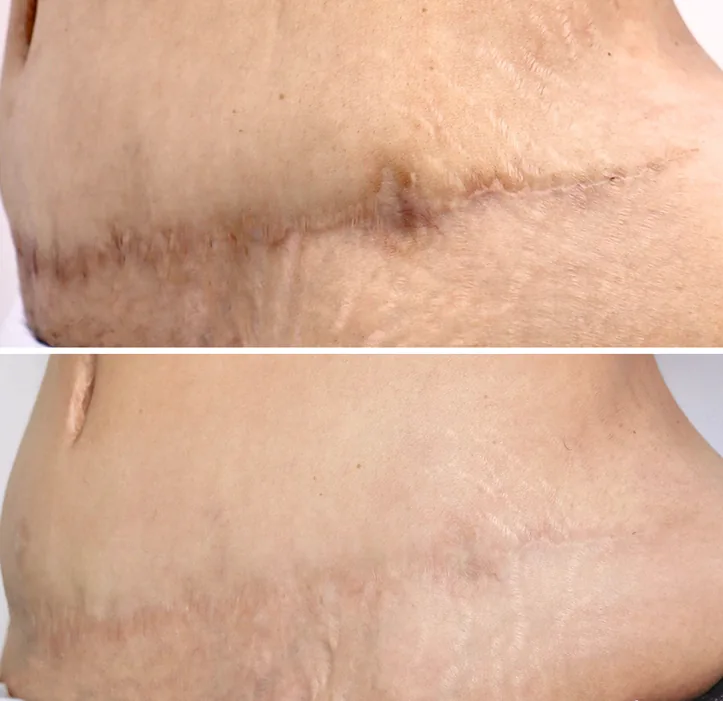
A tummy tuck scar can heal dark, raised, thick, or wider than expected because it is one of the longest incisions in cosmetic surgery, under constant tension, with uneven blood supply along its length. On medium and dark skin, the most common problem is hyperpigmentation, and thickened, hypertrophic tissue is also more frequent. A scar that didn’t heal as expected can still improve with non-surgical regeneration, even months or years after surgery.
You did everything right: you researched surgeons, followed your post-op instructions, wore your compression garment, and gave your body time to heal. And yet, months later, your tummy tuck scar doesn’t look the way you expected. Sometimes one side heals well while another stays inflamed or pigmented. If this sounds familiar, you didn’t do anything wrong, and you are not out of options.
Why Do Tummy Tuck Scars Become Problematic?
A tummy tuck (abdominoplasty) involves one of the longest incisions in cosmetic surgery, from hip to hip across the lower abdomen, which places significant stress on the skin during healing. Several factors influence how the scar develops:
- Genetics and healing response: some people naturally produce excess collagen during healing, which leads to thickened or raised scars. Others are more prone to post-inflammatory hyperpigmentation, which makes the scar darker.
- Skin tension along the incision: abdominoplasty requires tightening the skin, and this tension can widen the scar, make its texture uneven, and prolong inflammation.
- Blood supply variations: different segments of the incision receive different levels of circulation, which explains why one area may heal smoothly while another does not.
What Are the Most Common Tummy Tuck Scar Problems?
| Problem | What it looks like |
|---|---|
| Hyperpigmentation | The scar is darker than the surrounding skin |
| Hypertrophic or thickened tissue | A raised, rope-like appearance |
| Scar widening | The scar becomes wider because of tension during healing |
| Uneven healing | Different sections of the scar respond differently over time |
These outcomes are common and do not reflect poor care or a poor surgical result. A tummy tuck scar can also combine a raised area near the incision with a hollow indentation in the center, which I explain in my article on hypertrophic vs. atrophic scars.
Why Do Tummy Tuck Scars Darken on Dark Skin?
In medium to dark skin tones, melanocytes are more reactive to inflammation, so post-inflammatory hyperpigmentation is more common, and hypertrophic scars are also more frequent. Tension, friction from waistbands or tight clothing, and sun exposure all prolong inflammation, and inflammation stimulates more pigment. That is why protecting the scar from friction and the sun during the first months matters so much on darker skin.
What Is Non-Surgical Scar Regeneration?
Non-surgical scar regeneration supports the skin’s natural remodeling process instead of creating a new wound. Rather than removing the scar, it works with the existing tissue to:
- Improve collagen organization.
- Increase softness and flexibility.
- Support gradual tone normalization.
- Reduce overall scar visibility over time.
This approach helps the skin refine and complete the healing process, even months or years after surgery.
Why Do Scar Creams Stop Working?
Topical products can help during early healing, but mature tummy tuck scars behave differently. Once a scar is established, surface products cannot reach the dermis, creams alone cannot reorganize the collagen structure, and pigment embedded in the tissue remains largely unchanged. This is why many scars plateau after the first few months without targeted treatment.
Surgical Scar Revision vs. Non-Surgical Regeneration
Surgical revision cuts out the existing scar and creates a new incision. It is appropriate in some cases, but it introduces new trauma, and the same healing tendencies remain. Non-surgical scar regeneration offers:
- No new incisions.
- Progressive, adjustable improvement.
- Lower overall risk and minimal downtime.
- A focus on tissue quality, not replacement.
How Does My Scar Regeneration Process Work?
Every treatment begins with a detailed assessment of the length, thickness, and texture of the scar, its pigmentation patterns, and your healing history and skin response. My protocols are personalized and typically performed in a series of sessions spaced 60 to 90 days apart. Many clients notice changes in texture or color between the second and fourth sessions, with continued improvement over time. Results vary with skin type, the characteristics of the scar, and consistency.
Frequently Asked Questions
Why is my tummy tuck scar dark?
It is usually post-inflammatory hyperpigmentation, which is more common in medium and dark skin tones. Tension, friction, and sun exposure prolong the inflammation that triggers extra pigment.
Why did my tummy tuck scar get wider?
Abdominoplasty tightens the skin, and the tension along the incision can widen the scar during healing.
Why does one side of my tummy tuck scar look different?
Different segments of the incision receive different levels of circulation, so one area may heal smoothly while another does not.
Can an old tummy tuck scar still improve?
Yes. Non-surgical regeneration can help the skin refine the healing process, even months or years after surgery.
How many sessions does tummy tuck scar treatment take?
Treatments are done in a series of sessions spaced 60 to 90 days apart. Many clients notice changes in texture or color between the second and fourth sessions.
Your Healing Didn’t Fail
Choosing surgery is deeply personal, and wanting your scar to reflect the confidence you hoped to gain is completely valid. You don’t have to choose between being grateful for your surgery and wanting to improve how the scar looks and feels. With the right non-surgical approach, it is often possible to soften, lighten, and refine a tummy tuck scar. Book a consultation, and I will guide you so your healing can continue.
—
Natalia Mejía
Scar Specialist | Manhattan