October 12, 2026 · Natalia Mejia — Paramedical Tattoo & Scar Specialist in NYC
Lost a Lot of Weight? 5 Things to Discuss With Your Surgical Team Before Body Contouring
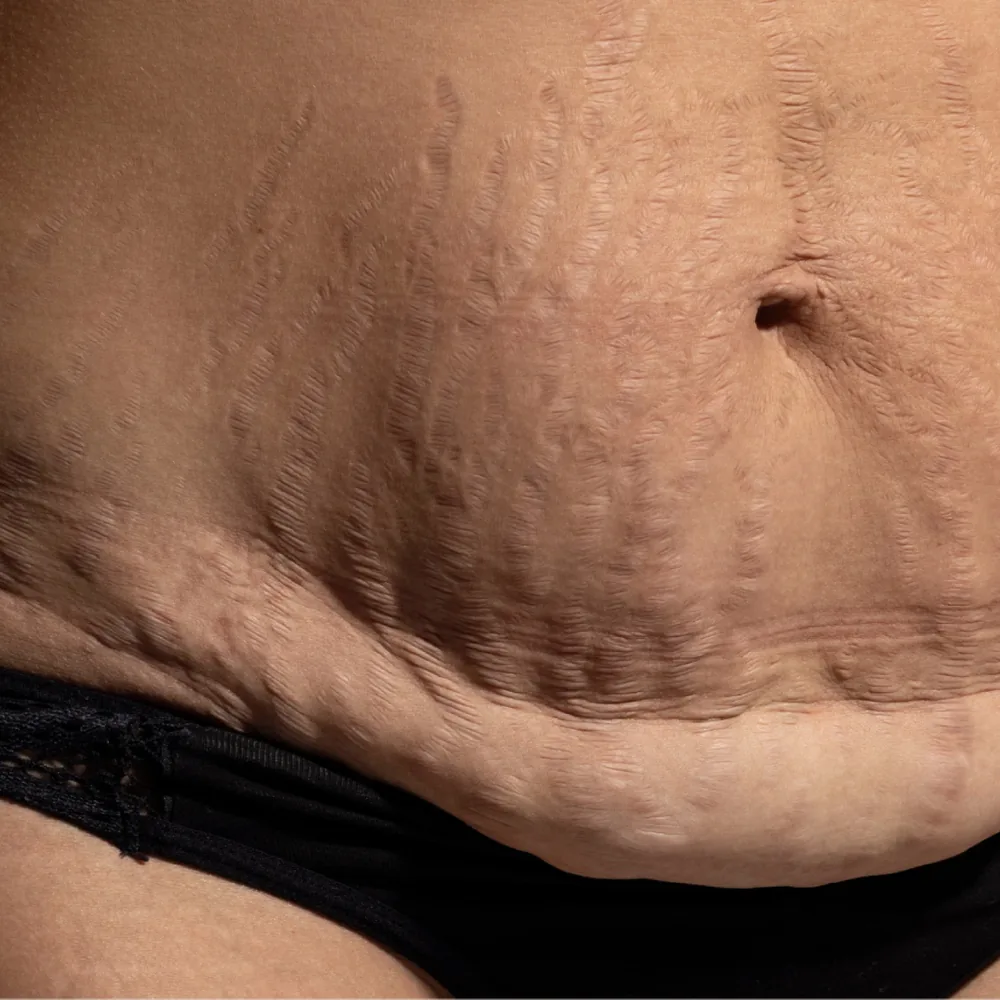
If you've lost a lot of weight and you're planning body contouring, talk to your surgical team about five things that can affect your scar: whether your weight is stable, how loose your skin is, whether your body is ready to heal, whether you take a GLP-1, and who will care for your scar after surgery.
Here's the short version:
- Keep your weight stable so your scar isn't stretched while it heals.
- Ask how your looser skin will affect the pull on your incision.
- Make sure your nutrition is ready to support healing.
- Tell your surgeon and your anesthesia team if you take a GLP-1.
- Have a plan for your scar before surgery day.
I'm Natalia Mejia, a scar specialist in Midtown Manhattan. Your surgeon plans your surgery, and I take care of your scar.
Why does it matter if my weight has stabilized for my scars?
A stable weight gives your scar a calm place to heal. If you keep gaining or losing weight in the months after surgery, the skin around your incision stretches every time you gain, and a scar that gets pulled while it heals can get wider.
The first six months are when a healing scar is most likely to widen into a stretched scar, so that's when a steady weight helps the most.
How does loose skin after weight loss affect my scar?
Loose skin makes your skin work harder. After a big weight loss, skin often doesn't bounce back, and research shows it really does change on the inside. It can be less stretchy than before.
When your surgeon removes the extra skin and pulls the rest tight, your incision ends up under constant pull. That pull is one of the main reasons a tummy tuck scar can heal wider, thicker, or darker than you expected. It's also why I look at the skin around a scar, not just the line itself.
Why does nutrition matter for my scar after losing weight fast?
Good nutrition gives your body what it needs to heal your incision into a smoother, flatter scar. When you lose a lot of weight fast, your body is often running low on what it needs to heal, and there's usually a lot of inflammation going on inside it. That's a hard starting point for a long incision.
Inflammation matters for your scar because it slows healing and keeps the area red and irritated longer. The longer a scar stays inflamed, the more likely it is to turn thick, raised, or darker than your skin. Before surgery, ask your surgical team how to eat so your body gets enough protein and nutrients to heal. Nutrition plays a real role in how a scar heals, and it's one of the first things I talk about with clients I see before surgery.
Can a GLP-1 like Ozempic affect how my scar heals?
It might, and that's why your surgical team needs to know you take one. Some studies have found more wound problems after body contouring in people using GLP-1 medications, like Ozempic or Wegovy. Other studies found no real difference. The research is still new.
Here's why that matters for your scar. A wound that has trouble closing, opens up, or gets irritated heals more slowly, and a slow, rough healing process can leave a wider or thicker scar. GLP-1s also lower your appetite, which can make it harder to eat enough to heal well.
Tell your surgeon and your anesthesia team before surgery, and don't stop or change your medication on your own. They'll decide how to handle it. Then tell me too, so I can keep a closer eye on your incision while it heals.
What's the plan for my scar after body contouring?
Your scar plan should start before surgery, not after. Your surgeon's instructions always come first, and I don't handle wound care. My job is how your scar looks and feels: its texture and its color.
With my 90-Day Scar Concierge, we meet a few weeks before your procedure to get your skin ready. During the first three months, you send me photos or come in for in-person visits on a set schedule and can reach me by text or FaceTime, so we catch problems early. Once your surgeon clears you, we move into regenerative treatments for texture and color and, if you want it, scar camouflage to blend what's left into your skin tone.
What happens at a scar consultation after body contouring?
I look at two things. Texture: is the scar flat, raised, sunken, or uneven? Color: is it red, darker than your skin, or lighter? Two people can have the same surgery and very different scars, so those answers shape a plan that's only for you.
If you're in New York and planning body contouring, book a consultation before your surgery date.
Frequently asked questions
Will my body contouring scar look worse before it looks better?
Often, yes. Many scars look red, raised, or darker in the first months, and that's a normal part of healing. Scars keep changing for 12 to 18 months, and the first 90 days set the foundation. That's why I'd rather start early than wait to see how it turns out.
Do body contouring scars heal differently on darker skin?
They can. On medium and dark skin, the most common problem I see is a scar that turns darker than the skin around it, and thick, raised scars are more common too. Melanin-rich skin reacts more to friction, sun, and inflammation, so protecting the scar early makes a real difference.
Is it too late to treat my scar if I already had surgery?
Almost never. Scars keep maturing for 12 to 18 months, and I see improvement months and even years after surgery. Older scars may need more sessions because the tissue is denser, but their texture and color can still get better without another surgery.
Do scar creams work on a body contouring scar?
They help most in the first months, while the scar is still forming. Once a scar matures, creams stay on the surface and can't reach the deeper layer where the scar tissue sits. At that point, a scar usually needs targeted treatment to change how it looks and feels.
Sources
- The effect of massive weight loss on the skin: histological and biomechanical changes. PMID 33145720.
- Complications in post-bariatric body contouring surgery using a practical treatment regime to optimise the nutritional state. PMID 36211632.
- Lean Mass Changes With Incretin Therapy Versus Lifestyle Intervention: A Systematic Review and Meta-Analysis of RCTs. PMID 41877354.
- Perioperative management of patients taking GLP-1 receptor agonists: SPAQI multidisciplinary consensus statement. PMID 40379536.
- Semaglutide and Postoperative Outcomes in Nondiabetic Patients Following Body Contouring Surgery. PMID 39665435.
- Postoperative Outcomes in Body Contouring Procedures Following GLP-1 Receptor Agonist Use: A 10-Year Analysis. PMID 39960861.
- Plastic Surgery in the Ozempidemic: Considerations for the Timing of Body Contouring Surgery in Patients with Semaglutide-Associated Weight Loss. PMID 40835770.