February 13, 2026 · Natalia Mejia — Paramedical Tattoo & Scar Specialist in NYC
Burn Scar Treatment: Why These Scars Require Specialized Care
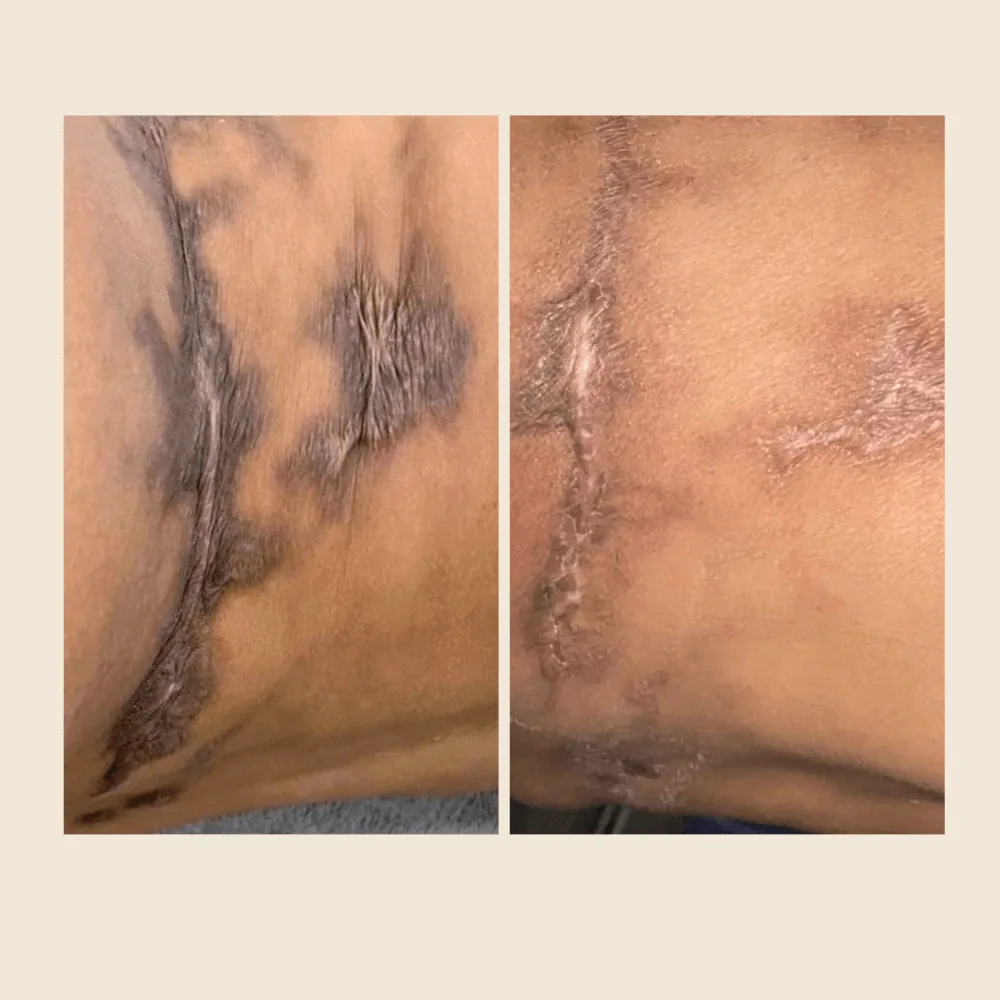
Burn scars rarely improve much on their own because a burn damages the skin at several levels at once: tissue, collagen and elastin, blood vessels, nerves, and pigment cells. As a result, they often become thick, tight, shiny or rigid, and darker or lighter than the surrounding skin, and they mature over 12 to 24 months. With specialized, progressive treatment, started once the wound is fully closed and stable, many burn scars become softer, flatter, more flexible, and more even in color.
If you have a burn scar, it’s important to understand something clearly:
Burn scars rarely improve significantly on their own.
They may soften slightly with time. They may change color. But because burn injuries affect the skin at multiple structural levels, these scars often require specialized treatment to achieve meaningful improvement.
The good news?
With the right approach, burn scars can improve — sometimes dramatically.
Why Are Burn Scars Different From Other Scars?
Not all scars behave the same way.
A surgical incision is controlled. An acne scar is inflammatory. A burn injury, however, causes complex, multi-layered damage.
When skin is burned, several things happen at once:
- Thermal destruction of tissue at varying depths (epidermis, dermis, sometimes deeper structures)
- Denaturation of collagen and elastin fibers
- Damage to blood vessels, affecting circulation
- Possible nerve injury, altering sensation
- Disruption of pigment-producing cells (melanocytes)
Because of this, burn scars often develop characteristics such as:
- Hypertrophic thickening
- Contracture (tightening and pulling of the skin)
- Irregular texture (shiny, rough, rigid)
- Hyperpigmentation or hypopigmentation
- Reduced elasticity
This combination of structural and pigment changes is what makes burn scars more complex than other types of scarring.
| What the burn damages | How it can show up in the scar |
|---|---|
| Tissue at varying depths | Thickening and irregular, shiny, or rough texture |
| Collagen and elastin fibers | Rigid skin, reduced elasticity, and contracture |
| Blood vessels | Affected circulation |
| Nerves | Altered sensation |
| Pigment-producing cells | Hyperpigmentation or hypopigmentation |
What Happens If Burn Scars Are Not Treated?
Burn scars typically go through a prolonged maturation process that can last 12–24 months.
During this time they may:
- Thicken
- Tighten
- Darken
- Become more rigid
Not all burn scars worsen — but many remain symptomatic (tight, raised, pigmented, or restrictive) without targeted intervention.
Early evaluation (once the wound is fully closed and medically stable) allows us to guide remodeling before fibrosis becomes more rigid.
However, even older burn scars can improve. They simply require a more strategic and progressive approach.
What Does Specialized Burn Scar Treatment Focus On?
Because burn scars affect multiple tissue levels, treatment must address:
1. Texture and Thickness
Controlled regenerative stimulation can encourage collagen remodeling, helping raised or rigid tissue gradually soften and flatten over time.
2. Flexibility
By improving tissue mobility and circulation, we can often reduce tightness and improve comfort — particularly important in scars near joints.
3. Pigment Imbalance
- Hyperpigmented burn scars may respond to controlled regeneration and pigment-balancing strategies.
- Hypopigmented scars are more complex. In some cases, melanocyte activity can be partially stimulated. In others, paramedical camouflage may be considered.
Each case must be evaluated individually.
4. Tissue Health
Improving vascular support and dermal organization enhances overall scar quality, not just appearance.
What Results Can You Expect?
Burn scar treatment is progressive.
- Most patients require multiple sessions.
- Improvements occur gradually over several months.
- The goal is not erasure — it is refinement.
With consistent treatment, many patients experience:
- Softer texture
- Reduced elevation
- Improved color balance
- Greater flexibility
- Better overall integration with surrounding skin
When Should You Start Treating a Burn Scar?
Treatment should only begin when:
- The burn wound is fully closed
- There is no active infection
- The tissue is medically stable
- The scar has entered the remodeling phase
Attempting treatment too early can interfere with healing.
A Personalized Approach
No two burn scars behave the same.
Treatment depends on:
- Depth of original burn
- Location
- Age of scar
- Pigment changes
- Vascularity
- Skin type
This is why burn scars require experienced evaluation — not a one-size-fits-all approach.
You Don’t Have to Just Accept It
Burn scars are complex. But they are not untreatable.
With the right regenerative strategy, the right timing, and the right expectations, significant improvement is possible.
If you’re living with a burn scar and wondering whether anything can be done, I invite you to schedule an evaluation.
Your skin has already done the hard work of surviving the injury.
Now we can focus on refining the healing.
Frequently Asked Questions
Do burn scars go away on their own?
Rarely. They may soften slightly or change color over time, but because burns damage several layers of the skin, meaningful improvement usually requires specialized treatment.
How long do burn scars take to mature?
Burn scars typically go through a prolonged maturation process that can last 12 to 24 months, during which they may thicken, tighten, darken, or become more rigid.
When can I start treating a burn scar?
Once the wound is fully closed, there is no active infection, the tissue is medically stable, and the scar has entered the remodeling phase.
Can old burn scars improve?
Yes. Older burn scars can still improve, but they need a more strategic and progressive approach.
Can a light burn scar be camouflaged?
Hypopigmented burn scars are more complex. In some cases, pigment activity can be partially stimulated; in others, paramedical camouflage may be considered.
If you are living with a burn scar, book an evaluation, and I will explain what is realistic for your skin.
—
Natalia Mejía
Scar Specialist | Manhattan