February 11, 2026 · Natalia Mejia — Paramedical Tattoo & Scar Specialist in NYC
Why Atrophic Scars Don’t Fill in on Their Own (And What Actually Helps)
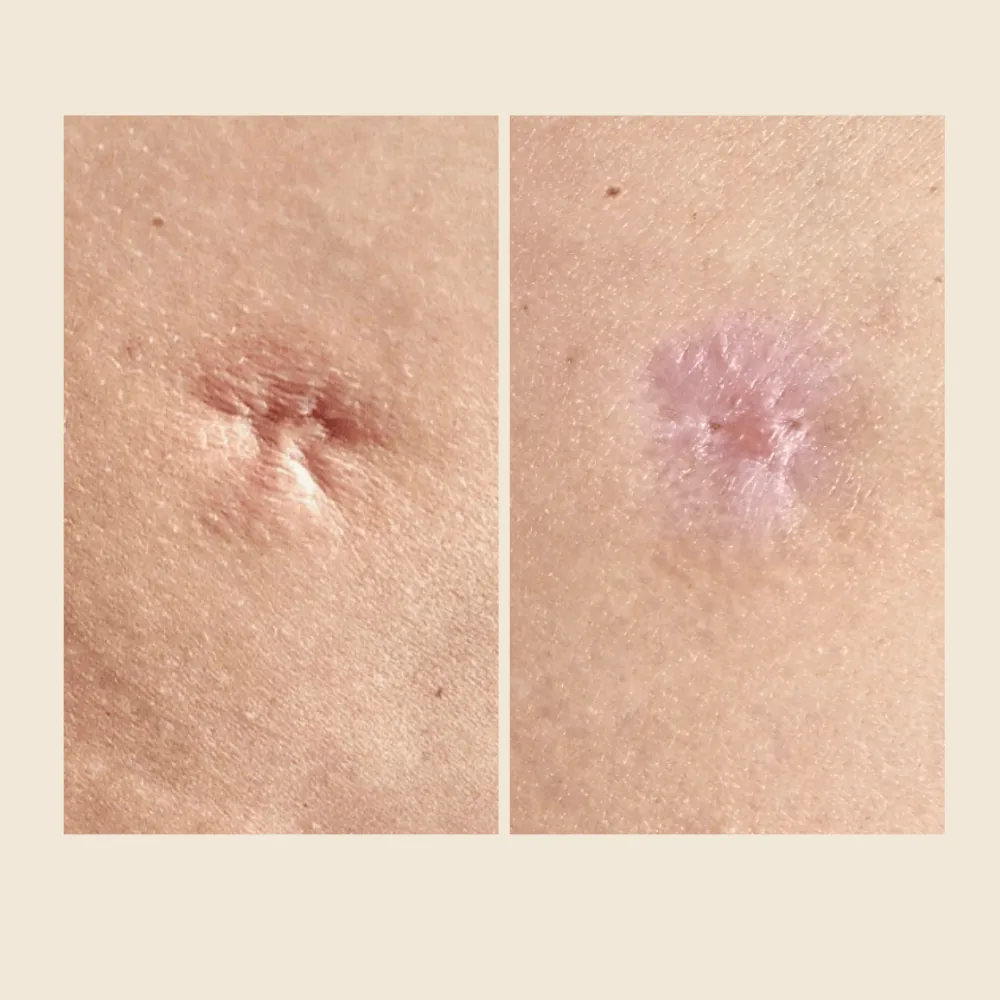
Atrophic scars don’t fill in on their own because they are a structural problem: the skin produced too little collagen while healing, and once the scar matures, the body does not go back to rebuild the missing volume. They may soften slightly over the years, but the depth usually remains. Improvement requires treatments that stimulate collagen at the dermal level, such as organic peels and stem-cell-based treatments, over several sessions.
If you’ve been hoping that your sunken acne scars will slowly fill in with time, I want to clarify something important:
Atrophic scars rarely correct themselves significantly without intervention.
They may soften slightly over the years. They may look less inflamed. But true structural filling does not typically happen on its own.
Understanding why helps you make informed decisions about treatment.
What Is an Atrophic Scar?
Atrophic scars are depressed scars caused by insufficient collagen production during healing.
When your skin is injured — whether by acne, trauma, or surgery — your body produces collagen to repair the damage. In some cases, that collagen production is inadequate. Instead of restoring the full volume of tissue, the area heals with a deficit.
The result is a depression in the skin.
Common types include:
- Ice pick scars – narrow, deep pits
- Boxcar scars – wider depressions with defined edges
- Rolling scars – broader indentations caused by fibrous bands tethering the skin
- General volume loss scars – areas that sit lower due to collagen deficiency
What all of them share is one thing:
There isn’t enough structural support beneath the surface.
| Type of atrophic scar | What it looks like |
|---|---|
| Ice pick | Narrow, deep pits |
| Boxcar | Wider depressions with defined edges |
| Rolling | Broader indentations caused by fibrous bands |
| Volume loss | A general sunken area where volume is missing |
Why Doesn’t Time Alone Rebuild Lost Volume?
Scar healing occurs in phases: inflammation, proliferation, and remodeling.
During the active healing stage, fibroblasts produce collagen to repair the wound. Once this phase ends, collagen production slows dramatically.
In atrophic scars, the body completed healing — just with insufficient volume.
After the scar matures, your body does not naturally return to “fill in” missing tissue unless new stimulation occurs.
This is why acne scars from years ago often look very similar over time. They may soften slightly, but the depth usually remains.
Why Does Early Treatment Respond Better?
Atrophic scars are often more responsive within the first year after formation because:
Collagen remodeling is still active
Cellular metabolism is higher
Blood supply is stronger
Tissue is more flexible
As scars mature:
Fibrosis increases
Collagen becomes more rigid
Cellular activity decreases
Surrounding skin continues aging and losing volume
This does not mean older scars cannot improve. It means they typically require more sessions and a more strategic approach.
What Actually Works for Atrophic Scars?
Because the issue is structural volume loss, treatment must stimulate collagen production at the dermal level.
Professional treatments work by creating controlled stimulation that reactivates fibroblasts and promotes new collagen formation.
In my practice, I use:
- Organic peels.
- Stem-cell-based treatments, as part of regenerative protocols designed to improve dermal density.
The goal is gradual collagen remodeling over time.
It is important to understand:
Atrophic scar treatment is progressive. It requires multiple sessions spaced appropriately to allow collagen formation between treatments.
Improvement typically occurs gradually over several months.
When Should You Consider Treatment?
If your atrophic scars are:
More than several months old
Not improving visibly
Affecting your confidence
It may be time to move beyond topical products and consider structural treatment.
Creams cannot rebuild missing dermal collagen. Only targeted stimulation can encourage your skin to regenerate volume.
Atrophic scars are not a surface issue. They are a structural one.
Time may soften them slightly — but it does not replace lost tissue.
If you’re ready to actively improve your skin instead of waiting for change that isn’t coming, I can evaluate your scar type and design a protocol tailored to your tissue.
Regeneration is possible.
It just requires the right stimulus.
Frequently Asked Questions
Do atrophic scars go away on their own?
Rarely. They may soften slightly over the years, but true structural filling does not usually happen without treatment.
What are the types of atrophic scars?
Ice pick scars (narrow, deep pits), boxcar scars (wider depressions with defined edges), rolling scars (broader indentations caused by fibrous bands), and general volume-loss scars.
Can creams fill in an atrophic scar?
No. Creams cannot rebuild missing dermal collagen; only targeted stimulation can encourage the skin to regenerate volume.
Can old atrophic scars still improve?
Yes, but they usually need more sessions and a more strategic approach. Atrophic scars respond best within the first year, while collagen remodeling is still active.
How long does atrophic scar treatment take?
It is progressive: multiple sessions spaced to allow new collagen to form, with gradual improvement over several months.
If you want to know how your scar compares with a raised one, read my article on hypertrophic vs. atrophic scars, or book a consultation so I can evaluate your scar type.
—
Natalia Mejía
Scar Specialist | Manhattan