April 27, 2026 · Natalia Mejia — Paramedical Tattoo & Scar Specialist in NYC
Dark Scars After Surgery: Why They Happen and How to Prevent Them
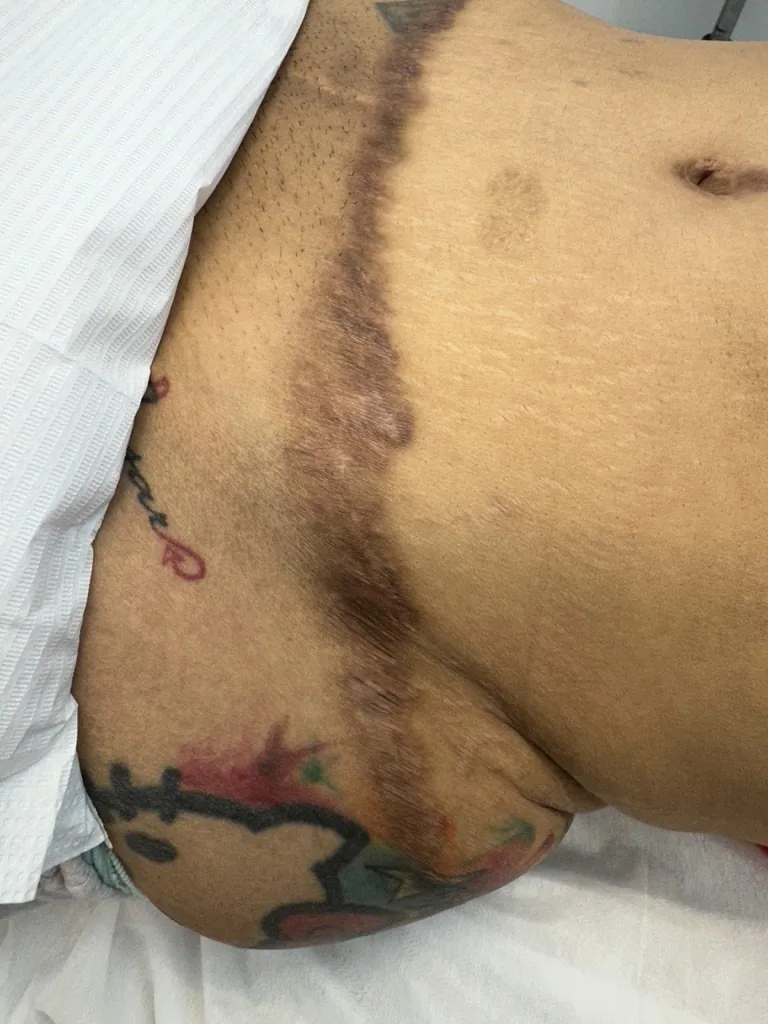
A dark scar is usually a sign of post-inflammatory hyperpigmentation: during healing, the skin around the injury produces extra melanin, so the scar ends up darker than your natural skin tone. The main causes are inflammation, sun exposure, friction, and genetics. People with darker skin tones are more prone to it, and sun protection, gentle care, and friction control are the best ways to prevent it.
Many people notice their scars darkening after surgery and wonder why their scars are so dark and what it means for their healing. In this article, I explain what causes scar hyperpigmentation, how everyday habits can make it worse, and how to prevent it. Dark scars and discolored scar tissue often appear alongside hypertrophic or keloid scars in people with sensitive or darker skin types.
What Is Scar Hyperpigmentation?
Hyperpigmentation occurs when certain areas of the skin produce more melanin, which changes your natural skin tone. After the skin has been injured, whether from surgery, an accident, or even acne, the healing process can trigger an overproduction of melanin, which leads to darker or discolored scars. Most scars fade naturally over time, but dark scars need specific attention to become less noticeable.
What Causes a Scar to Turn Dark?
1. Inflammation and the Injury Response
When the skin is injured, an inflammatory response is triggered as part of healing. This inflammation can increase the activity of melanocytes, the cells that produce melanin, and the scar can end up darker than the surrounding skin. This is known as post-inflammatory hyperpigmentation (PIH). The more intense the injury or inflammation, the higher the risk.
2. Sun Exposure
Sun exposure is one of the most common and avoidable causes of scar hyperpigmentation. Fresh scars are especially vulnerable to UV rays, because the new skin is more sensitive and has not yet developed full protection. Even short periods in the sun without protection can darken a scar permanently. This is why dermatologists often recommend applying sunscreen to healing scars or covering the area entirely.
For example, imagine you have a new surgical scar on your arm and spend a sunny day outside without sunscreen or protective clothing. Within a few hours, the scar can become darker and more noticeable because of the melanin production triggered by UV rays.
3. Friction and Repeated Trauma
Repeated friction or pressure on a scar can also cause hyperpigmentation. When a scar is constantly irritated, for example by tight clothing or accessories, the skin becomes inflamed, the healing process lasts longer, and melanin production increases. Scars in high-movement areas, such as the waist, elbows, or knees, are especially vulnerable.
For example, if you have a surgical scar on your waistline, tight jeans or belts can rub it constantly and make it more prone to darkening. Liposuction scars are particularly prone to hyperpigmentation, which makes them some of the most challenging to treat.
4. Genetics and Skin Type
Your genetic makeup plays a significant role in how your skin heals. People with darker skin tones naturally have more active melanocytes, so they are more likely to develop darker scars than people with lighter skin tones. For example, a person with medium to dark skin may notice that a surgical scar darkens over time because the skin tends to produce more melanin during healing.
Which Everyday Habits Can Darken a Scar?
| Habit | Why it darkens the scar |
|---|---|
| Not applying sunscreen | UV rays darken healing scars and can cause permanent pigmentation changes |
| Picking at scabs | It adds trauma to the area, prolongs the healing response, and increases the risk of hyperpigmentation |
| Using harsh skincare products | Strong acids or alcohol can worsen inflammation and cause hyperpigmentation |
How Can You Prevent Dark Scars After Surgery?
Prevention starts during the healing process. These are the steps I recommend:
- Sun protection: always use a broad-spectrum sunscreen (SPF 30 or higher) on healing scars, and consider protective clothing or hats to cover the area.
- Gentle care: do not pick at scabs or irritate the scar with harsh chemicals. Choose gentle, hydrating skincare products that support healing without irritation.
- Friction control: be mindful of clothing or accessories that rub against the scar, and wear loose-fitting clothing when possible.
- A specialist’s evaluation: if you notice significant hyperpigmentation or unusual scarring, consult a scar specialist to explore treatment options, such as scar regeneration and camouflage tattooing.
Can a Dark Scar Be Treated?
Yes. Some scars are naturally darker because of individual skin characteristics, but many can be treated to better match your natural skin tone and become less noticeable over time. When a dark scar does not improve with care, camouflage tattooing for hyperpigmentation can neutralize the dark tones and blend the scar with your skin.
Will My Scar Darken Again After Treatment?
A properly treated scar does not darken again on its own, but it still needs care. Regeneration improves the quality and stability of the tissue: it supports collagen reorganization, reduces chronic inflammation, improves blood flow and resilience, and helps regulate pigmentation. A treated scar behaves more like normal skin. It is not immune; it is less reactive.
Hyperpigmentation never appears randomly. It always has a cause:
| Trigger | How it can darken a scar |
|---|---|
| Inflammation | Irritation or trauma stimulates melanocytes to produce more pigment |
| Sun exposure | UV radiation is one of the strongest triggers; any skin, treated or not, can darken without protection |
| Friction | Constant rubbing from clothing, straps, or repetitive movement creates low-grade inflammation |
| Irritating products | Strong acids, fragrances, and harsh exfoliants can trigger post-inflammatory hyperpigmentation |
| Hormonal changes | They affect the entire skin, not just the scar; a treated scar is not more vulnerable than the skin around it |
How Can You Keep Your Results?
- Sun protection: use SPF daily on the treated area, especially during the first year.
- Gentle skincare: avoid irritating products and keep the area hydrated and calm.
- Less friction: be mindful of clothing, straps, or habits that cause constant rubbing.
- Early attention: if you notice irritation or color changes, address them early; that is exactly when a professional check-in helps.
Frequently Asked Questions
Will my scar get dark again after treatment?
Not on its own. A regenerated scar is more stable and less reactive, but sun, irritation, friction, and inflammation can still darken it, so daily SPF and gentle care protect your results.
Why are my scars so dark?
Most dark scars are caused by post-inflammatory hyperpigmentation: the inflammation of healing makes the skin produce extra melanin. Sun exposure, friction, and a genetic tendency, which is more common in darker skin tones, can make it worse.
Do dark scars fade on their own?
Most scars fade naturally over time, but dark scars often need specific attention, such as sun protection, gentle care, and friction control, to become less noticeable.
Can the sun make a scar darker?
Yes. Fresh scars are especially vulnerable to UV rays, and even short periods in the sun without protection can darken a scar permanently.
What sunscreen should I use on a healing scar?
Use a broad-spectrum sunscreen with SPF 30 or higher, and cover the area with clothing or a hat when possible.
Are liposuction scars more likely to turn dark?
Yes. Liposuction scars are particularly prone to hyperpigmentation, which makes them some of the most challenging to treat.
Need Help With a Dark Scar?
Small changes in how you care for your scars can make a big difference. If your scar has darkened or you want expert advice on improving its appearance, book a personalized consultation with me.
—
Natalia Mejía
Scar Specialist | Manhattan