June 26, 2025 · Natalia Mejia — Paramedical Tattoo & Scar Specialist in NYC
Stretch Mark Camouflage Aftercare: Understanding the Healing Process
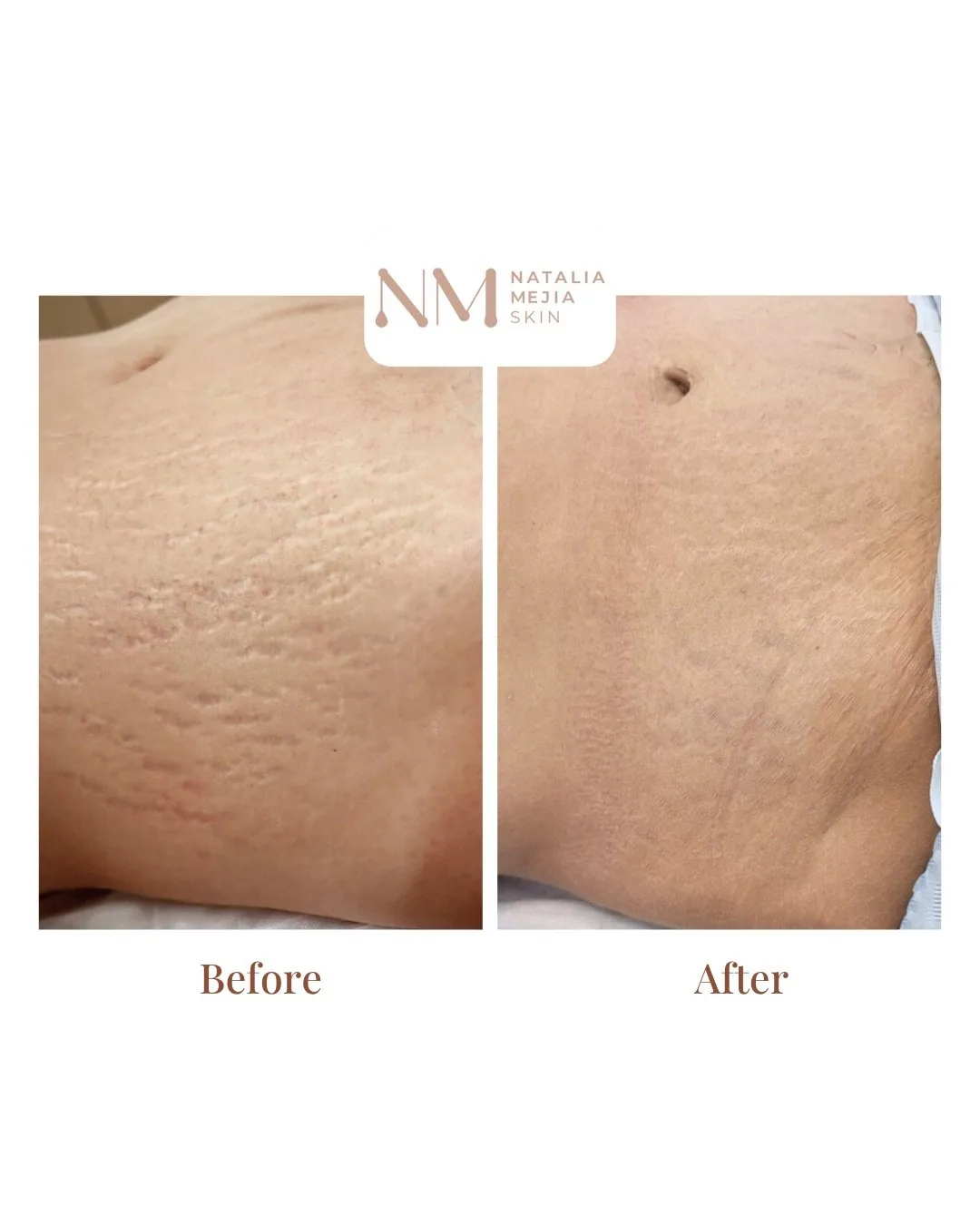
After stretch mark camouflage, the final result is not immediate: it begins to settle around 3 to 4 months after your last session. During the first weeks, the stretch marks may look darker, especially on medium to dark skin tones. This is temporary post-inflammatory hyperpigmentation. The most important aftercare rule is to shield the area completely from the sun for the first 4 months.
Stretch mark camouflage can be life-changing, but like any treatment involving the skin, it requires time, care, and realistic expectations. If you are considering this procedure or are in the middle of your healing, this is what happens after the tattoo machine turns off.
When Will I See the Final Result?
You may notice an improvement right away, but the true results begin to settle around 3 to 4 months after your last session. The skin needs time to:
- Fully close and remodel.
- Process the pigment through the immune system.
- Balance out any inflammation or temporary discoloration.
If you are curious about the science behind this timing, I explain why spacing scar treatments matters.
What Are the Healing Stages After Stretch Mark Camouflage?
| Period | What to expect |
|---|---|
| First few weeks | The stretch marks may look darker, especially on medium to dark skin tones. This is temporary post-inflammatory hyperpigmentation. |
| Following months | The darkening fades gradually as the inflammation settles and the pigment integrates with the skin. |
| 3 to 4 months after the last session | The true results begin to settle. |
Is It Normal for Stretch Marks to Look Darker After Camouflage?
Yes. It is completely normal for stretch marks to appear darker during the first few weeks, especially on medium to dark skin tones. This is called post-inflammatory hyperpigmentation, and it is part of how the skin responds to microtrauma. The darkening is temporary: the color fades gradually over the following months, as the inflammation settles and the pigment integrates with the skin. If you want to understand this reaction better, read my article on dark scars and hyperpigmentation after surgery.
Why Is Sun Protection So Important?
Sun protection is one of the most important factors in your healing:
- For the first 4 months, the treated area should be fully shielded from the sun, even from indirect exposure.
- UV exposure during this healing window can make post-inflammatory hyperpigmentation permanent.
- Even after healing, ongoing sun exposure accelerates pigment oxidation, which can change the tone of your camouflage tattoo and leave gray, yellow, or patchy areas.
That is why I strongly advise no tanning, no outdoor sun on the area, and daily use of a high-SPF mineral sunscreen if any exposure is unavoidable. For deeper healing and prevention, I often combine stretch mark camouflage with regeneration techniques.
Why Do I Use the “Watercolor Technique”?
I approach camouflage as a layered artistic process, not a one-time fix. My method is inspired by watercolor painting: I work in soft washes of color and build the pigment gradually over time.
- I space each camouflage session at least 3 to 4 months apart, so your skin has time to heal fully and reveal how it is retaining the pigment.
- This spacing lets me evaluate how your tone shifts, how the pigment settles, and how much saturation the next layer needs.
- Working this way avoids oversaturation and keeps the color natural, stable, and blended.
The result is subtle, soft, and long-lasting, without the risks of too much ink too quickly.
How Does Your Skin Accept the Pigment?
Camouflage tattooing does not cover stretch marks like makeup. The pigment is implanted into the skin, and your immune system gradually interacts with it: your body’s phagocytes, the cells that “digest” foreign material, remove some pigment particles, while others stay embedded in the tissue. This is why it is crucial to:
- Let the area heal fully between sessions, for a minimum of 3 to 4 months.
- Be patient and avoid comparing your skin at 3 weeks with what it will look like at 3 months.
- Follow all aftercare instructions and avoid exfoliation and sun exposure.
If you want to know how tattooing works on other skin conditions, read more about tattooing scar tissue safely.
Why Is Every Treatment Personalized?
Not all stretch marks are the same. Before and during treatment, I consider:
- Your natural skin tone and undertone.
- The texture, age, and color of your stretch marks.
- Whether you have already completed regenerative treatment.
- How your skin reacts after each session.
This approach lets me create results that are customized, safer, and more likely to age beautifully with your skin. You can also see how I address common skin concerns with paramedical tattooing. Before you start, make sure you understand how stretch mark camouflage works and who is a good candidate.
Frequently Asked Questions
How long does stretch mark camouflage take to heal on dark skin?
The true results begin to settle around 3 to 4 months after your last session. On medium to dark skin tones, the stretch marks may look darker during the first few weeks; this darkening fades gradually over the following months.
Why do my stretch marks look darker after camouflage?
It is post-inflammatory hyperpigmentation, a normal response of the skin to microtrauma. It is temporary, as long as you protect the area from the sun.
Can I go in the sun after stretch mark camouflage?
No. For the first 4 months, the area should be fully shielded from the sun, even indirect exposure, because UV rays can make the hyperpigmentation permanent. Afterward, avoid tanning and use a high-SPF mineral sunscreen if exposure is unavoidable.
How far apart are stretch mark camouflage sessions?
I space sessions at least 3 to 4 months apart, so the skin can heal fully and I can see how it retains the pigment.
What should I avoid after stretch mark camouflage?
Avoid sun exposure, tanning, and exfoliation, and follow all aftercare instructions.
Thinking About Stretch Mark Camouflage? Let’s Do It Right
If you are ready to improve the appearance of your stretch marks, remember that true results take time, and that is a good thing. With proper healing, realistic expectations, and professional care, stretch mark camouflage can offer a beautiful, lasting transformation. Book your consultation to find out if you are a good candidate and to start the right healing path together.
—
Natalia Mejía
Scar Specialist | Manhattan