June 25, 2025 · Natalia Mejia — Paramedical Tattoo & Scar Specialist in NYC
Hypertrophic Scars: How to Recognize, Prevent, and Treat Them
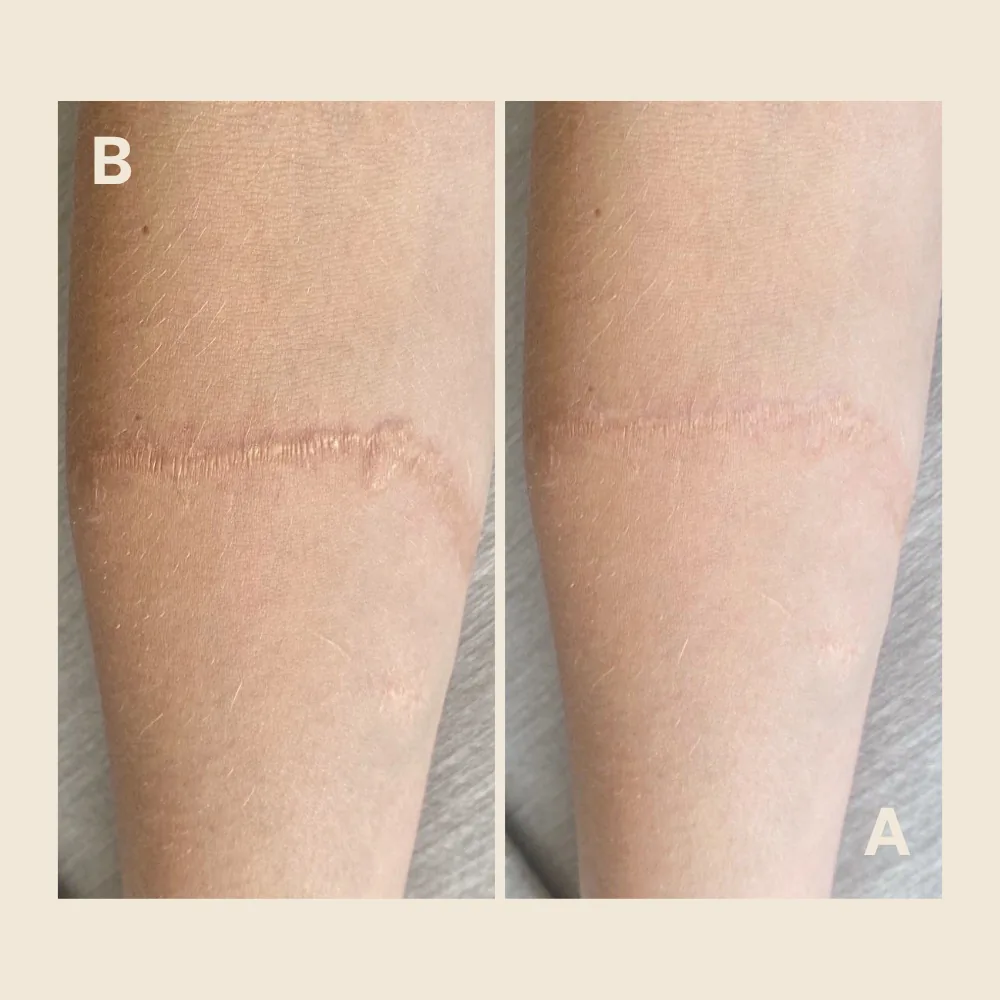
A hypertrophic scar is a raised, firm scar that forms when your body makes too much collagen while a wound heals. It stays within the edges of the original injury, often looks red, pink, or darker than your skin, and usually appears within weeks. Many soften over time, but most need help to flatten.
What is a hypertrophic scar?
When skin heals, it lays down collagen to close the wound. In a hypertrophic scar that process keeps going past the point where it should stop, so the scar tissue builds up above the surface of the skin.
The word sounds clinical, but what it describes is simple: an overgrowth of scar tissue that stays inside the footprint of the original cut, burn, incision, or breakout. It's one of the most common scar types I see in my Midtown studio, especially after surgery.
What does a hypertrophic scar look like?
Every scar is different, but hypertrophic scars share a few features you can check on your own skin.
It's raised and firm. The scar feels thick or bumpy and can look like a ridge along the skin, especially over a surgical incision. Clients describe it as "a rope under the skin" or "a swollen line."
The color is off. It usually looks red, pink, or purple while it's active. On medium and dark skin tones it often turns brown and stands out even more, because the same inflammation that thickens the scar also triggers post-inflammatory hyperpigmentation.
The edges are defined. A hypertrophic scar follows the line of the wound. If you had a tummy tuck, the scar tracks the incision, just raised and darker. It doesn't spill over into healthy skin.
It can itch, feel tight, or hurt. This is more common in the first months and in areas that move a lot, like a knee, a shoulder, or the edge of the jaw.
It doesn't keep growing. This is the sign that matters most. If the scar is spreading beyond the wound or forming irregular borders, it may be a keloid, which needs a different approach. I break down the differences in hypertrophic scars versus keloids.
Hypertrophic scar, keloid, or normal scar?
| Normal (flat) scar | Hypertrophic scar | Keloid | |
|---|---|---|---|
| Height | Flat or slightly raised | Raised, firm, thick | Raised, often dome-shaped |
| Borders | Follows the wound | Stays within the wound | Grows beyond the wound |
| Color | Fades toward skin tone | Red, pink, purple, or brown | Often darker than surrounding skin |
| When it appears | Weeks after healing | Weeks to months after injury | Can appear months or years later |
| Course over time | Keeps fading | May soften, rarely flattens on its own | Tends to persist or grow |
If you're not sure which one you have, the border is the fastest clue. Inside the wound line, it's hypertrophic. Outside it, think keloid and get it checked by a dermatologist before any treatment.
What causes hypertrophic scars?
The short answer is too much collagen. The longer answer is that several things push a healing wound in that direction, and most of them are not your fault.
Tension on the wound. Skin that's pulled while it heals produces more scar tissue. Joints, the chest, the shoulders, and long surgical incisions are the usual spots.
Infection or prolonged inflammation. Anything that keeps the wound irritated (an infection, a reopened incision, friction from clothing) extends the inflammatory phase and feeds collagen production.
Delayed healing. Wounds that take longer to close carry a higher risk. Circulation problems, poor nutrition, and rough handling of the wound all slow things down.
Genetics and skin tone. Some people are simply more prone, and a family history of raised scars or keloids raises the odds. Darker skin tones tend to react more strongly to inflammation.
No early scar care. Skipping sun protection, hydration, and tension relief in the first months leaves the scar to do its own thing.
Scar formation is your body trying to protect you. It sometimes needs help refining the result.
Do hypertrophic scars go away on their own?
Sometimes, partly. Hypertrophic scars usually show up within the first weeks after the wound closes and can keep changing for 12 to 18 months. Over that time many soften and lose some redness. Fewer flatten completely without help.
Many of my clients come in after a year or more with the same line: "It just stopped improving, and I don't know what else to try." That plateau is normal, and it's also the point where the right treatment can still move things. I go through the full timeline, stage by stage, in my guide to the hypertrophic scar healing stages.
How do you prevent a hypertrophic scar?
You can't guarantee a flat scar, but you can lower the odds a lot, especially in the first year.
Support the wound. Adhesive strips or silicone strips after the stitches come out reduce tension on the line, which is the single biggest thing you control.
Keep it clean and closed. Preventing infection keeps the inflammatory phase short.
Protect it from the sun. UV exposure darkens a healing scar through extra melanin and makes it harder to treat later. Sunscreen on the scar, even after it looks healed, is not optional.
Keep it hydrated. Moisturizers and occlusive products (silicone, mineral oil, urea, and lactic acid formulations) keep the tissue soft and calm the itch. If you've wondered whether urea can help, this is where it fits: as a softener, not as a flattening treatment on its own.
Massage and mobilize, once it's calm. Gentle massage and stretching of the skin around the scar improve mobility and reduce adhesions. Wait until the redness and inflammation settle, and never press hard enough to hurt.
Ask before you start. If the scar is fresh and you're still under a surgeon's care, follow their protocol first. Regeneration treatments come after, not instead.
How are hypertrophic scars treated?
Hypertrophic scars respond to treatment, and improvement means two things: less height and a color that's closer to your skin. Below are the options I work with and where each one fits. Some medical options, like steroid injections or laser, belong with a dermatologist or plastic surgeon and are worth discussing with them if your scar is very thick or painful.
| Approach | What it does | Best for |
|---|---|---|
| Stem-cell-based treatments | Support the skin’s own regeneration, softening raised tissue and improving texture and tone together | Firm, thick scars with height and discoloration |
| Organic peels | Reduce inflammation and even out color | Redness, brown discoloration |
| Scar massage therapy | Improves mobility, reduces adhesions and tightness | Scars that feel tight or restrict movement |
| Camouflage tattooing | Blends remaining color difference into your skin tone | Only after the scar is flat, stable, and fully healed |
Camouflage is last on purpose. Tattooing pigment into a scar that's still raised or active doesn't fix the height and can make the color worse. I explain why in why a scar needs regeneration before camouflage and compare the paths in non-surgical scar revision options.
How I treat hypertrophic scars in my studio
I focus on regeneration first. Rather than covering the scar, the goal is to restore the skin's balance, bring the thickness down, and soften the pigmentation. Depending on your scar, I may recommend organic peels, stem-cell-based treatments, or scar massage, and I only bring in camouflage once the scar is stable. You can read how the program is structured on my scar regeneration and pre- and post-op scar care page.
I begin treating hypertrophic scars from month four after the wound has fully closed. That's the window where the scar is stable enough to respond but still active enough to benefit from regenerative support. If your scar is years old, that's fine too. I've seen real changes in long-standing scars. The best moment to start is covered in when to start scar treatment.
What I look at in a consultation: how raised and firm the scar is, its color compared with your surrounding skin, how long ago the wound closed, whether it's still changing, and whether it crosses a joint or a high-movement area. Those five things decide the plan.
How do you know if you need help?
You may benefit from treatment if:
- your scar is raised and firm to the touch
- it’s been about 6 months since your surgery (if you are still before or just after surgery, my 90-Day Scar Concierge program can support your scar from the start)
- the color is darker or redder than the surrounding skin
- it hasn't improved in several months
- it makes you self-conscious or limits how you dress or move
If the scar is spreading beyond the original wound, bleeding, or suddenly changing after years of being stable, see a dermatologist first. Those aren't typical hypertrophic scar behaviors and deserve a medical look.
Frequently asked questions
Is it normal for a scar to be raised?
Yes, up to a point. Many scars look slightly raised and pink in the first weeks and settle on their own. A scar that stays thick, firm, and red past the first few months, or that feels like a rope under the skin, has likely become hypertrophic. It's common, it isn't dangerous, and it can be treated.
Are hypertrophic scars permanent?
Not necessarily. They can keep changing for 12 to 18 months and some soften on their own during that time. Most don't flatten completely without help. Scars that stopped improving after a year or more still respond to regeneration treatment, so the age of the scar isn't a reason to give up on it.
Why does my hypertrophic scar itch or hurt?
Itching, tightness, and tenderness are common while the scar is active, especially in the first months and over joints or areas that move a lot. Keeping the scar hydrated and protected helps with the itch. If the pain is sharp, the scar is bleeding, or it feels infected, see your surgeon or a dermatologist.
Can a hypertrophic scar turn white?
Yes. As a hypertrophic scar matures it can lose its redness and end up paler than your skin, sometimes while staying slightly raised. White scars can't be brought back with creams, but the color difference can be treated with regeneration and, once the scar is flat and stable, with camouflage tattooing.
Are hypertrophic scars dangerous?
No. A hypertrophic scar is a cosmetic and sometimes functional problem, not a medical danger. The exception is any scar that keeps growing beyond the wound, bleeds, or changes suddenly after being stable. Those signs point to a keloid or something else and should be checked by a dermatologist before any treatment.
Can acne, burns, or piercings cause hypertrophic scars?
Yes. Any wound that heals with too much collagen can become hypertrophic, including deep acne breakouts, burns, and cartilage piercings like a helix. Burn scars and acne scars often combine raised areas with discoloration, so the treatment plan usually addresses texture and color together, and the timing depends on how healed the skin is.
Let's look at your scar together
If your scar is affecting how you feel in your own skin, there is a path forward. Scars don't disappear, but they can become less visible, softer, and easier to live with. Bring your questions, and if you like, a photo. Book a consultation and we'll go over what your scar needs and what's realistic.