February 2, 2026 · Natalia Mejia
Regeneration First: Why Preparing the Skin Changes Scar Camouflage Results
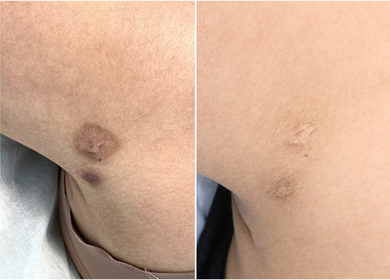
Many people come to me with a clear goal: they want their scar to be less visible.
Scar camouflage and pigment neutralization can absolutely help with that — and in some cases, these techniques can be performed without prior regeneration. However, regeneration will always be my recommendation when the goal is the most natural, refined, and long-lasting result.
Let me explain why skin preparation matters — and how both approaches can coexist safely and honestly.
Scar Tissue Is Not Normal Skin
Scar tissue behaves differently than healthy skin.
After surgery, trauma, burns, or inflammation, the body heals by forming tissue that has:
Disorganized collagen
Altered blood supply
Reduced elasticity
Because of these changes, scars absorb and retain pigment differently. This is why a scar cannot be treated the same way as normal skin — especially when tattooing or neutralizing color.
Camouflage Without Regeneration: When It’s an Option
In some cases, pigment camouflage or color neutralization can be performed
This approach focuses primarily on improving color contrast
The client understands the limitations
Texture is relatively stable
The main concern is color, not structure
However, it’s important to understand that without regeneration:
The existing texture remains visible
Pigment retention can be less predictable
More sessions may be needed over time to refine or maintain results
This doesn’t mean the result is poor — it simply means it is more limited
Why Texture Matters as Much as Color
Even when pigment is carefully matched, texture plays a major role in how a scar is perceived.
Raised, indented, or rigid areas catch light differently
That’s why regeneration focuses on preparing the tissue
What Regeneration Does Before Camouflage
Regenerative treatments support the skin’s natural remodeling process
Improving collagen organization
Increasing circulation and oxygenation
Softening rigid or thickened tissue
Enhancing flexibility and skin resilience
When camouflage is applied after regeneration:
Pigment adheres more evenly
Color blending looks more natural
Results tend to age better over time
Fewer correction sessions are usually needed
Regeneration doesn’t replace camouflage — it enhances it
Pigment Retention Depends on Tissue Quality
Scar tissue that hasn’t been regenerated may absorb pigment unevenly:
Some areas hold more color
Others fade faster
Touch-ups may be required sooner
When the tissue has been regenerated and stabilized, pigment has a healthier foundation to anchor into
My Approach: Options, Not Pressure
In my practice, every scar begins with a thorough evaluation:
Texture
Color
Thickness
Age
Circulation
From there, I explain all available options clearly.
Some clients choose to begin with regeneration. Others prefer to move forward with camouflage or neutralization alone.
Both paths are valid — the difference lies in how optimized the skin is for the result
My role is not to push one option, but to guide each person with transparency, so they can make an informed decision that aligns with their goals and their skin.
Regeneration Is an Investment in the Result
Camouflage can improve appearance. Regeneration improves the foundation.
When both are combined, the outcome is usually:
More natural
More stable
More refined
This is why regeneration will always be my recommendation when possible — not because camouflage alone is wrong, but because the skin can do more when it’s properly supported.
Final Thoughts
Scar camouflage is not about hiding something. It’s about working with the skin at the level it’s ready for.
Both regeneration and camouflage have their place. The key is understanding what each approach can realistically achieve.
My commitment is to treat scars with honesty, respect, and clinical care — always prioritizing what will serve your skin best in the long term.
Natalia Mejía, Scar Specialist