October 17, 2026 · Natalia Mejia — Paramedical Tattoo & Scar Specialist in NYC
Skin After Major Weight Loss: What It Means for Your Scar
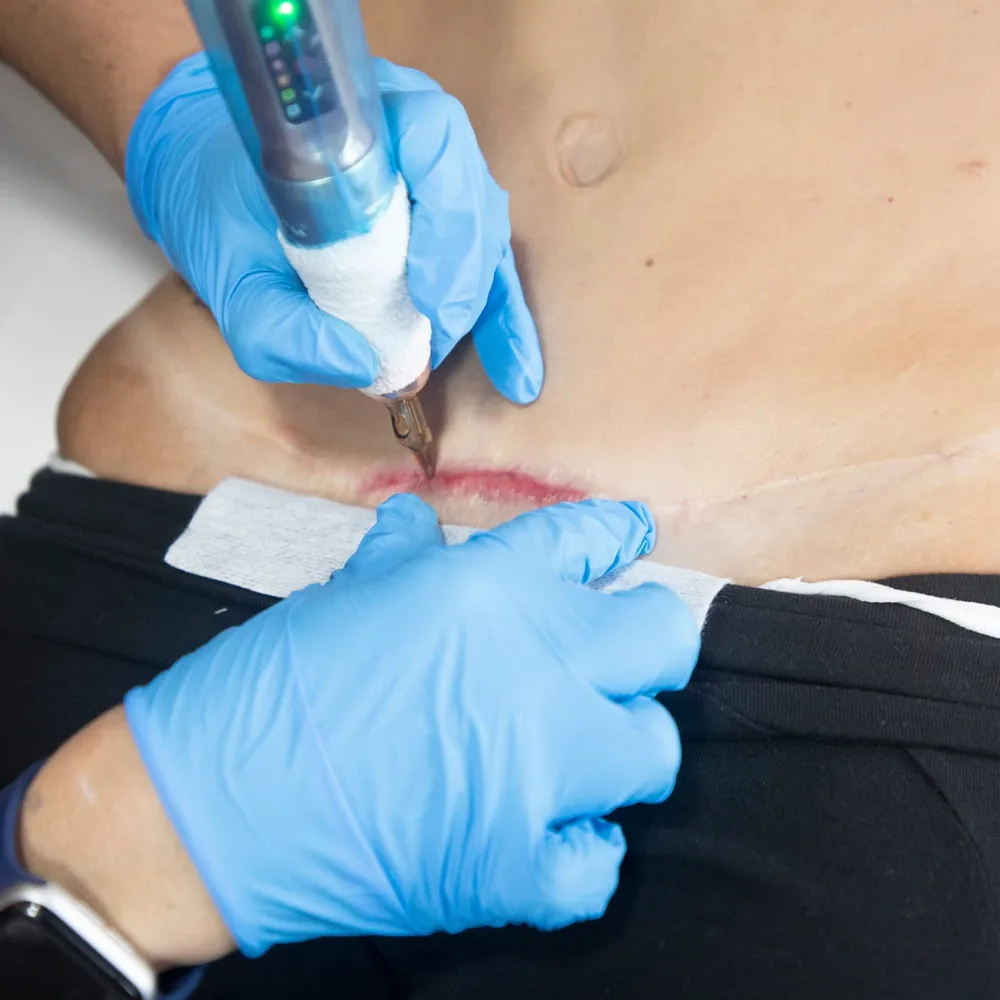
After you lose a lot of weight, your skin doesn't simply shrink back. It can become looser and less stretchy, and it often behaves differently during surgery and recovery. That matters for your scar, because your scar heals inside that same skin. The better you understand it, the better you can protect it.
I'm Natalia Mejia, a scar specialist in Midtown Manhattan. This is exactly the kind of skin I work with when a scar is ready for treatment.
What happens to your skin after you lose a lot of weight?
Your skin stretched to fit your body before, and when the weight comes off, it doesn't always bounce back. Research on skin after major weight loss shows that it really does change on the inside. It can be looser and slower to spring back when you pinch it.
That's why so many people choose body contouring after weight loss. Surgery removes the extra skin, but the skin that stays is the same skin that went through the change.
Why does that matter for your scar?
Your scar isn't healing on its own. It's healing inside tissue that has already been through a lot. When a surgeon removes extra skin and pulls the rest tight, the incision stays under pull while it heals, and skin that doesn't stretch well has a harder time handling it.
That pull is one of the main reasons a scar can heal wider, thicker, or darker than you expected. It's also why a long incision, like any scar, needs attention from the start, not months later.
Where do scars after weight loss surgery have the hardest time?
Scars have the hardest time in places that move a lot or get rubbed all day. The lower belly, the chest, under the breasts, and the inner thighs carry more pull, and they're also where waistbands, bra straps, and seams sit. Constant friction keeps a healing scar irritated longer, and an irritated scar is more likely to thicken or darken.
How can you protect your scar while it heals?
Follow your surgeon's instructions first. Then, once your incision has closed, these habits help your scar:
- Wear soft, breathable fabrics like cotton over the scar.
- Don’t wear shapewear or compression garments longer than your surgeon prescribes, and never more than 3 months. Wearing them past that point creates friction that can make your scars worse.
- Keep the skin and the scar moisturized, since hydrated skin handles rubbing better.
- Protect the scar from the sun with clothing or a broad-spectrum sunscreen of SPF 30 or higher.
- Watch for changes: a scar that gets thicker, darker, or tight is worth having checked.
When should a scar specialist look at your scar?
The sooner, the better, and it can start before surgery. With my 90-Day Scar Concierge, we meet a few weeks before your procedure to get your skin ready. During the first three months, you send me photos or come in for in-person visits, so we catch problems early. Once your surgeon clears you, we move into regenerative treatments and, later, scar camouflage if you want it.
If you're planning body contouring after weight loss, this is the right moment to start thinking about your scar, not after it has already settled.
Frequently asked questions
Can I still get a good scar if my skin is loose?
Yes. Loose skin makes healing harder, but it doesn't decide your result on its own. Protecting the scar from pull, rubbing, and sun, and getting the right care early, all make a real difference. I can't promise a scar will disappear, but I can help it heal softer and less visible.
Is it normal for my scar to itch or feel tight?
Some itching is common while a scar heals. But if your scar is getting raised, thick, and firm, and it itches or feels tight, it may be turning into a raised scar. That kind of scar responds best when we treat it early, so it's worth getting it evaluated instead of waiting.
Can a scar on loose skin be camouflaged later?
Yes. Camouflage adds pigment that matches your skin tone so the scar blends in, but I only do it once the scar is flat and stable. That's why regeneration usually comes first. Camouflage is semi-permanent, so it needs touch-ups over time to keep its look.
Sources
The effect of massive weight loss on the skin: histological and biomechanical changes. PubMed PMID 33145720, 2020.