February 18, 2026 · Natalia Mejia — Paramedical Tattoo & Scar Specialist in NYC
Areola Necrosis After Surgery: Understanding Your Recovery Options
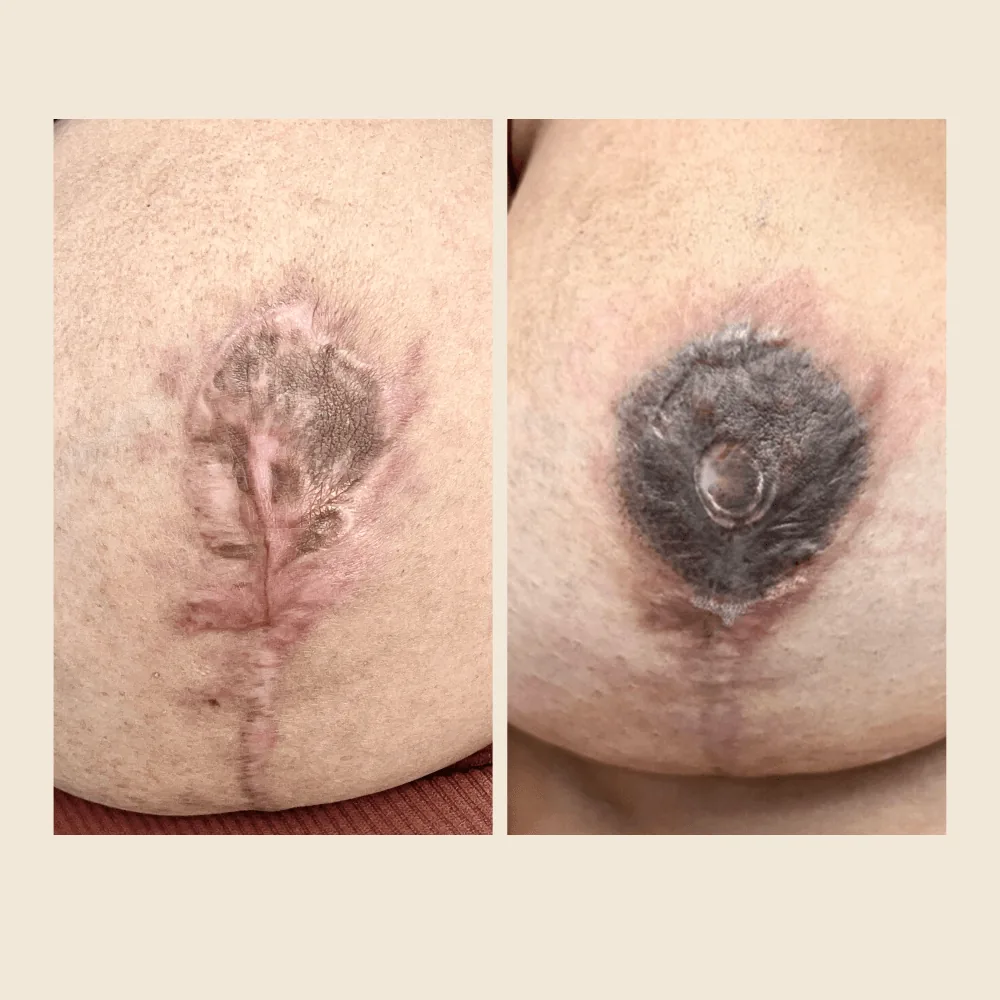
Areola necrosis happens when the nipple–areola complex loses its blood supply after breast surgery and the tissue dies; lost tissue does not regenerate, and the area heals with scar tissue. Recovery follows a clear sequence: complete medical healing, scar maturation, regeneration of the scar when needed, and then paramedical areola tattooing, which can recreate realistic color, shape, and depth. Tattooing usually waits 10 to 12 months after the wound has fully closed.
If you’ve experienced areola necrosis after breast surgery, you may feel shocked, confused, or unprepared for what happened.
This complication is not commonly discussed in depth before surgery, yet when it occurs, it can feel overwhelming. I want you to know something important: while lost tissue cannot regenerate, there are safe and effective options to restore appearance and support healing.
Understanding the process is the first step toward moving forward.
What Is Areola Necrosis?
Areola necrosis occurs when the nipple–areola complex loses adequate blood supply after surgery. Without sufficient circulation, tissue cannot survive.
This can happen after:
- Nipple-sparing mastectomy
- Breast reduction
- Breast lift (mastopexy)
- Breast reconstruction
- Revision surgeries
- Any procedure involving significant repositioning or tension on the tissue
Certain risk factors increase the likelihood of necrosis, including smoking, vascular compromise, prior radiation, diabetes, high skin tension, or complex surgical history.
What It Looks Like
Early signs may include:
- Dusky or gray discoloration
- Delayed healing
- Tissue that appears darkened or non-viable
If full necrosis occurs, the tissue becomes black, dries, and eventually separates from surrounding healthy tissue. This may result in partial or complete loss of the nipple–areola complex.
Once tissue dies, it does not regenerate. The body heals the area with scar tissue.
That scar becomes the foundation for future restoration.
The First Phase: Healing Comes Before Restoration
When necrosis occurs, cosmetic restoration is never the first step.
The priority is:
- Complete wound closure
- Infection prevention
- Stabilization of the tissue
- Allowing inflammation to fully resolve
In many cases, this healing phase takes several months. In more complex cases — especially after radiation or reconstructive surgery — it may take longer.
Tattooing too early can compromise pigment retention and increase complications.
In my practice, I never rush this process. The skin must be fully healed, medically stable, and mature before any paramedical tattooing is considered.
Scar Regeneration Before Tattooing
After the wound has closed and stabilized, I focus on improving the quality of the scar tissue.
Scar tissue following necrosis often has:
- Altered collagen organization
- Reduced vascularity
- Irregular texture
- Areas of fibrosis
Before applying pigment, I may recommend a regeneration phase to:
- Improve texture and flexibility
- Reduce excessive fibrosis
- Support circulation
- Optimize the surface for better pigment retention
Scar tissue does not behave like normal skin. Preparing it properly significantly improves the aesthetic outcome of areola tattooing.
This phase is individualized. Not all cases require extensive regeneration, but many benefit from targeted preparation.
Paramedical Areola Tattooing: What It Can and Cannot Do
Paramedical areola tattooing does not recreate lost tissue. It does not restore projection or sensation.
What it can do is:
- Recreate realistic color
- Restore shape and symmetry
- Create depth using advanced shading techniques
- Improve overall visual balance
Using custom pigment blending and layered application techniques, I work to create a three-dimensional illusion that looks natural under different lighting conditions.
In cases of partial necrosis, tattooing can blend residual tissue with surrounding skin.
In cases of complete loss, tattooing recreates the areola visually over healed scar tissue.
Why Sequence Matters
Successful outcomes depend on proper sequencing:
- Complete medical healing
- Scar maturation
- Tissue evaluation
- Regeneration (when indicated)
- Paramedical tattooing
- Follow-up and touch-up sessions
This structured approach reduces complications and improves long-term pigment stability.
Emotional Impact Matters
Areola necrosis is not just a physical complication. It can affect identity, femininity, body image, and emotional recovery.
Many patients tell me that after reconstruction, something still feels incomplete.
Restoration through paramedical tattooing does not erase what you have been through. But it can restore familiarity. It can help you feel more aligned with your body again.
That moment — when you look in the mirror and feel recognition — is meaningful
When to Seek Evaluation
If you have experienced:
- Partial or complete areola loss
- Severe areola scarring
- Asymmetry after reconstruction
- Hypopigmentation following necrosis
A professional evaluation can determine:
- Whether the tissue is ready
- Whether regeneration is recommended
- What realistic results look like in your case
Every situation is unique. There is no universal timeline.
You Are Not Out of Options
Areola necrosis is a serious complication. But it is not the end of your healing journey.
With proper timing, tissue preparation, and specialized paramedical tattooing, meaningful aesthetic restoration is possible.
If you are navigating recovery after breast surgery in NYC, I am here to guide you safely and thoughtfully through your options. Book a consultation to find out whether your tissue is ready.
Frequently Asked Questions
What is areola necrosis?
It is the death of the nipple–areola tissue when it loses adequate blood supply after surgery, such as a nipple-sparing mastectomy, breast reduction, breast lift, reconstruction, or revision.
What does areola necrosis look like?
Early signs include dusky or gray discoloration, delayed healing, and tissue that looks darkened. With full necrosis, the tissue turns black, dries, and separates from the healthy tissue around it.
Can the areola grow back after necrosis?
No. Once tissue dies, it does not regenerate; the body heals the area with scar tissue, which becomes the foundation for restoration.
When can I tattoo the areola after necrosis?
Only when the skin is fully healed, medically stable, and mature, usually 10 to 12 months after the wound has fully closed. Tattooing too early can compromise pigment retention.
What can an areola tattoo do after necrosis?
It can recreate realistic color, restore shape and symmetry, and create depth with shading. It cannot recreate lost tissue, projection, or sensation.
—
Natalia Mejía
Scar Specialist | Manhattan