April 10, 2026 · Natalia Mejia — Paramedical Tattoo & Scar Specialist in NYC
Scar Healing Stages and Timeline: What Happens From Week 1 to Month 18
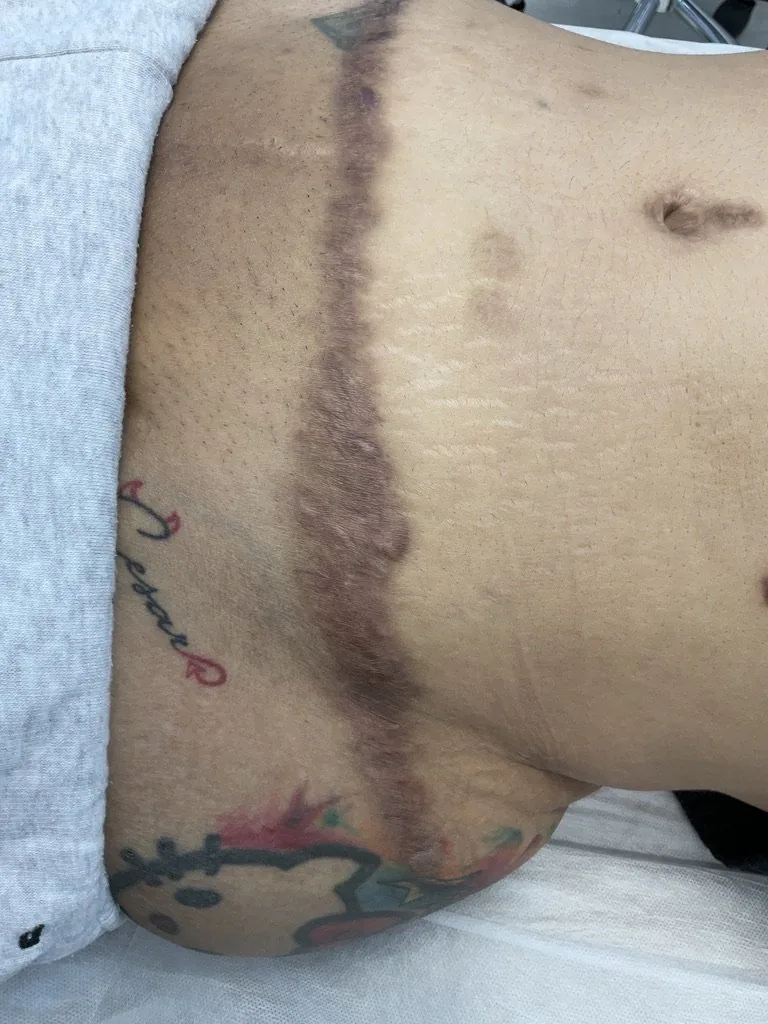
Quick answer: A scar goes through three stages: inflammation in the first days, rebuilding over the next several weeks, and a long remodeling phase that lasts 12 to 18 months. Most surgical scars look "healed" by month two or three, but the tissue stays fragile until it fully matures, and that is when it most often widens, darkens or thickens.
When we have surgery, most of us are careful with the scar for the first month, maybe two. The reality is that many of the scars I see in my practice start to widen or thicken after the third month, right when people stop protecting them. Understanding the real timeline helps you avoid that and know when it makes sense to act.
The stages of scar healing, month by month
Scar tissue forms as part of the body's natural repair process. Collagen is produced quickly to close the wound, but this new collagen is weaker and more disorganized than healthy skin. Over the following months, the body keeps reorganizing it. Medically, this happens in overlapping phases: an inflammatory phase that usually lasts several days, a proliferative phase that can last several weeks, and a maturation and remodeling phase in which the tissue slowly gains strength (StatPearls, NIH).
| Stage | Approximate timing | What you may see | What helps most |
|---|---|---|---|
| Inflammation | First days | Redness, swelling, tenderness | Follow your surgeon's wound-care instructions |
| Rebuilding (proliferation) | First weeks up to about month 2 | A pink or red line that closes and starts to feel firmer | Keep it clean and protected; avoid friction |
| Early remodeling | Months 3 to 6 | Color may deepen; the scar can feel raised, tight or itchy | The most vulnerable window for widening: reduce tension, protect from sun |
| Remodeling | Months 6 to 12 | Gradual softening and flattening; color starts to settle | Consistent care; this is often a good moment to start treatment |
| Final maturation | Months 12 to 18 | Flatter, softer scar with a stable color | The scar is close to its final appearance |
What is the average scar tissue healing time?
For most surgical scars, the full process takes 12 to 18 months (American Board of Cosmetic Surgery), and the remodeling phase can continue even longer in some cases (StatPearls, NIH). The surface closes within the first weeks, but the deeper layers keep repairing for more than a year.
Healthy skin renews its outer layer in roughly four weeks, about 26 to 28 days (PubMed Central, NIH). In my experience, scar tissue needs much longer: its regeneration cycle can take up to about 120 days. That difference matters for anyone considering treatment, and it is why I space regeneration sessions every 60 to 90 days instead of every 30. Treating scar tissue too often can trigger inflammation and hyperpigmentation that set your progress back.
Every scar follows its own pace. The type of surgery, the area of the body, skin tension, your skin tone and how the scar is cared for all change the timeline.
Why months 3 to 18 matter more than the first weeks
From the third month on, the skin looks closed, so most people go back to their normal routine: exercise, lifting, tight clothing, sun. But the tissue still doesn't have the strength or elasticity of healthy skin. Constant stretching and pulling during this period can widen the scar, and inflammation or sun exposure can darken it.
This is also the window when raised scars can develop. A scar that becomes thicker, firmer and redder instead of flatter may be turning hypertrophic; you can see how that process unfolds in the stages of a hypertrophic scar. If a scar grows beyond the edges of the original wound, or if it hurts, bleeds or opens, see your surgeon or a dermatologist.
On medium and deeper skin tones, darkening is one of the most common changes during these months. I explain why it happens and how to prevent it in why scars turn dark after surgery.
How long does it take for a scar to flatten and fade?
A normal scar usually flattens, softens and fades gradually over the months, and what looks raised or discolored at three months can improve significantly by the one-year mark (American Board of Cosmetic Surgery). Color changes follow a similar path: most scars start pink or red, and over time they fade toward a lighter tone. On deeper skin tones, a scar can also stay darker than the surrounding skin.
Scars don't disappear; they become less visible. If a scar is still very red, raised or tight after 12 months, it is unlikely to improve much more on its own, and that is when treatment can make a real difference.
Can scars stretch or get worse over time?
Yes. Stretched scars are one of the most common problems I see during the long healing phase. They appear wider and flatter than the original incision and usually develop in areas under tension or movement, such as:
- Abdominal scars after surgeries like a tummy tuck
- Scars across joints such as knees and elbows
- Areas where the skin is naturally under tension
Even scars that have already stretched can improve. Treatment focuses on strengthening the tissue, improving elasticity and supporting collagen reorganization. You can read more about it in how to improve stretched scars.
What you can do at each stage
Keep protecting the scar after month two. A scar that looks healed on the surface is not finished underneath.
- Reduce tension: compression garments recommended by your surgeon can reduce strain on the scar, especially on the abdomen or chest after body contouring or breast surgery.
- Avoid pulling and stretching: limit activities that stretch the skin over the scar during the first months after surgery, and follow your surgeon's guidance about when to return to exercise.
- Protect it from the sun: new scars are especially sensitive to UV rays, and a scar that darkens in the sun can stay dark permanently (American Society of Plastic Surgeons).
- Keep the skin hydrated: well-hydrated skin keeps its elasticity better throughout the healing period.
Be realistic about scar creams. Creams and gels can support a young scar, but they need consistent use over months, and they rarely change the structure of a mature scar. I explain what they can and can't do in do scar creams really work.
Don't wait too long to ask. If a scar is widening, darkening or thickening, there are non-surgical options that work best while the tissue is still remodeling. Here is my guide on when to start scar treatment.
How I work with scars during the healing timeline
I can support your scar from the start with my 90-Day Scar Concierge program (which starts before surgery and guides you through the first 90 days of healing); otherwise, I start treatment at around 6 months, while the tissue is still responding. My approach is to support the body's own healing process: first regenerating the scar tissue so its texture and flexibility improve, and only then, if it makes sense for your skin, working on color with camouflage.
For patients who are preparing for surgery or are in the first weeks after it, I offer a guided plan for the first 90 days after surgery, so the scar is protected from the start.
Frequently asked questions
Do scars ever go away completely?
No. Once the skin forms scar tissue, it doesn't turn back into normal skin. With time and the right care, most scars become flatter, softer and less noticeable, and treatment can help a visible scar feel less defining.
How long does it take for scar tissue to form?
Scar tissue starts forming within the first days after an injury or surgery, as the body produces collagen to close the wound. That early tissue keeps changing for months and doesn't reach its final structure until it matures, usually 12 to 18 months later.
How do I know when my scar is fully healed?
A mature scar is usually flat, soft and flexible, its color has stopped changing, and it no longer itches or feels tight. If your scar is still red, raised or changing color, it is still remodeling.
Can a scar get worse months after surgery?
Yes. Between months 3 and 18, tension, friction, sun exposure and inflammation can make a scar widen, thicken or darken. That is why care should continue well beyond the first weeks.
Why is my scar still red or pink after several months?
Redness is a normal sign that the scar is still remodeling, and it can last many months. It usually fades gradually as the scar matures. If it is getting redder, thicker or itchy instead, have it checked.
How long should I use a scar cream before I see results?
Scar creams and gels need consistent daily use for several months, and they tend to work better on newer scars than on mature ones. If you see no change after a few months, it is worth reassessing the approach with a specialist.
Your scar is still changing, and that is good news
A scar that is less than 18 months old is still remodeling, which means there is still room to guide how it heals. If you've noticed changes in your scar after surgery, or you want to protect it from the start, book a consultation and we'll look at where your scar is in its healing timeline and what makes sense for your skin.
Sources
- Wound Healing Phases, StatPearls (National Library of Medicine)
- Complex Wound Management, StatPearls (National Library of Medicine)
- Top Tips for Post-Surgery Scarring, American Board of Cosmetic Surgery
- Fun in the sun: Protecting your plastic surgery scars, American Society of Plastic Surgeons
- Key Factors in the Complex and Coordinated Network of Skin Keratinization, PubMed Central (NIH)